
Mastering TM-30-15: Everything You Need to Know About Light Quality
Lighting quality significantly impacts our daily lives, influencing everything from mood and productivity to the appearance of spaces and objects. As lighting technology advances, so do the metrics used to evaluate light quality.
TM-30-15 is a modern metric that provides a comprehensive assessment of light quality, surpassing traditional methods like the Color Rendering Index (CRI). This blog post will delve into TM-30-15, explaining its components, advantages, practical applications, and how it compares to CRI. By mastering TM-30-15, lighting professionals and enthusiasts can make informed decisions to achieve superior lighting results.
What is TM-30-15?
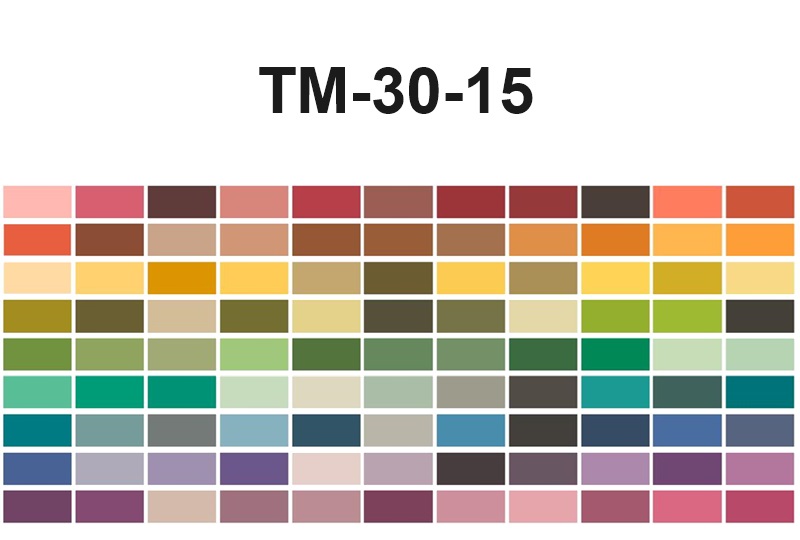
TM-30-15 is a method developed by the Illuminating Engineering Society (IES) to evaluate and describe the color rendering capabilities of light sources. Unlike CRI, which has been the standard for decades, TM-30-15 offers a more detailed and accurate assessment. It uses a larger set of color samples (99 versus CRI's 8 or 14) and includes two primary indices: Rf (Fidelity Index) and Rg (Gamut Index). These indices provide a clearer picture of how a light source renders colors compared to a reference light source, making TM-30-15 a valuable tool for modern lighting design.
Components of TM-30-15

Rf measures the accuracy with which a light source renders colors. It ranges from 0 to 100, with higher values indicating better color fidelity. Unlike CRI, Rf uses 99 color samples to provide a more comprehensive evaluation. This index helps designers understand how accurately colors will appear under a given light source.
Rg (Gamut Index):
Rg assesses the saturation of colors under a light source. Values above 100 indicate increased saturation, while values below 100 indicate reduced saturation. Rg complements Rf by providing insight into how vibrant or muted colors will appear, allowing for more nuanced lighting designs.
Color Vector Graphic:
The Color Vector Graphic visually represents the color rendering properties of a light source. It shows deviations in hue and saturation for each of the 99 color samples. This graphic helps designers quickly identify areas where a light source may perform well or poorly, aiding in the selection of the best lighting solution.
TM-30-15 vs. CRI
Historical Context
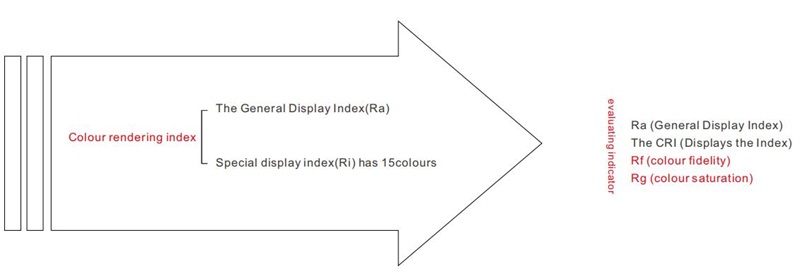
CRI has been the standard for assessing color rendering for many years, but it has limitations, such as a small set of color samples and a lack of information on color saturation. TM-30-15 was introduced to address these shortcomings and provide a more comprehensive evaluation.
Comparative Analysis
TM-30-15 offers several advantages over CRI, including a larger color sample set and separate indices for fidelity and gamut. This allows for a more detailed understanding of light quality. TM-30-15 also provides better performance in diverse lighting conditions, making it a more reliable metric for modern applications.
Case Studies
Real-world examples demonstrate the superiority of TM-30-15. In scenarios where accurate color rendering is crucial, such as art galleries or retail environments, TM-30-15 has shown to provide a more accurate and reliable assessment compared to CRI.
Advantages of TM-30-15

Comprehensive Color Evaluation: TM-30-15 uses a larger set of color samples, providing a more detailed and accurate evaluation of color rendering. This leads to better lighting design and application.
Enhanced Accuracy: The dual indices of Rf and Rg offer a clearer understanding of both color fidelity and saturation. This improved accuracy helps in creating lighting environments that meet specific needs and preferences.
Adaptability: TM-30-15 is applicable across various lighting technologies and environments, from residential to commercial and industrial settings. Its comprehensive approach makes it versatile and adaptable.
Improved Design Decisions: Lighting designers and architects can use TM-30-15 to make informed decisions, ensuring that their designs achieve the desired aesthetic and functional outcomes. This leads to better user experiences and satisfaction.
Practical Applications of TM-30-15
Residential Lighting: TM-30-15 can enhance home lighting by ensuring accurate color rendering, creating a more pleasant and functional living environment.
Commercial and Retail Lighting: In commercial settings, accurate color rendering can improve customer experiences and sales. TM-30-15 helps retailers choose lighting that highlights products effectively.
Art Galleries and Museums: TM-30-15 is crucial in preserving the true colors of artworks and exhibits, ensuring that they are displayed in their best light.
Healthcare Facilities: Optimal lighting is essential in healthcare settings for accurate diagnosis and treatment. TM-30-15 helps create lighting environments that support healthcare professionals and patients.
How to Measure and Implement TM-30-15
Measurement Tools

Various tools and devices are available to measure TM-30-15, including spectroradiometers and color meters. These tools capture detailed color data, which is then analyzed using TM-30-15 calculations.
Interpreting Results
Understanding TM-30-15 data involves looking at the Rf and Rg values and the Color Vector Graphic. High Rf values indicate good color fidelity, while Rg values provide insights into color saturation. The graphic helps visualize performance across different colors.
Implementing Findings
Applying TM-30-15 results involves selecting light sources that meet the desired criteria for fidelity and saturation. This can improve the quality and functionality of lighting in various applications.
Common Misconceptions About TM-30-15
Misunderstanding Rf and Rg
Some may confuse the roles of Rf and Rg. Rf measures color accuracy, while Rg assesses saturation. Both indices are essential for a comprehensive understanding of light quality.
Comparing TM-30-15 with CRI
There is a misconception that TM-30-15 is just a replacement for CRI. In reality, TM-30-15 offers a more detailed evaluation, addressing the limitations of CRI and providing additional insights.
Future of TM-30-15 in Lighting
Industry Adoption
TM-30-15 is gaining acceptance in the lighting industry, with more professionals recognizing its benefits. As awareness grows, its adoption is expected to increase.
Potential Developments
Future advancements in light quality metrics may build on TM-30-15, incorporating new research and technology to further improve color rendering assessments.
FAQs
1. How does TM-30-15 improve lighting design?
By providing accurate information on color rendering, TM-30-15 helps designers choose the best lighting solutions for specific applications.
2. Can TM-30-15 be used for all types of lighting?
Yes, TM-30-15 is versatile and can be applied to various lighting technologies and environments.
3. What tools are needed to measure TM-30-15?
Spectroradiometers and color meters are commonly used to measure TM-30-15.
4. Why is color quality important in lighting?
Color quality affects the appearance of spaces and objects, influencing mood, productivity, and overall experience.
5. How do Rf and Rg indices work together in TM-30-15?
Rf measures color fidelity, while Rg assesses saturation. Together, they provide a comprehensive evaluation of light quality.
6. Is TM-30-15 widely accepted in the industry?
TM-30-15 is gaining acceptance as more professionals recognize its advantages over traditional metrics like CRI.
7. How can TM-30-15 impact energy efficiency in lighting?
By selecting light sources with optimal color rendering properties, TM-30-15 can enhance the effectiveness of lighting solutions, potentially leading to energy savings.
Conclusion
TM-30-15 represents a significant advancement in evaluating light quality. By understanding and using TM-30-15, lighting professionals can achieve superior lighting results, enhancing the functionality and aesthetics of various environments. Embracing this modern metric can lead to better design decisions and improved user experiences.
Why do LED Lights Flicker in the Camera?
What is Light Glare and How to Reduce Light Glare?
Related Article
Need an Instant Quote For Your Upcoming Projects?
Send us the details and we will get back to you within 12 hours.