
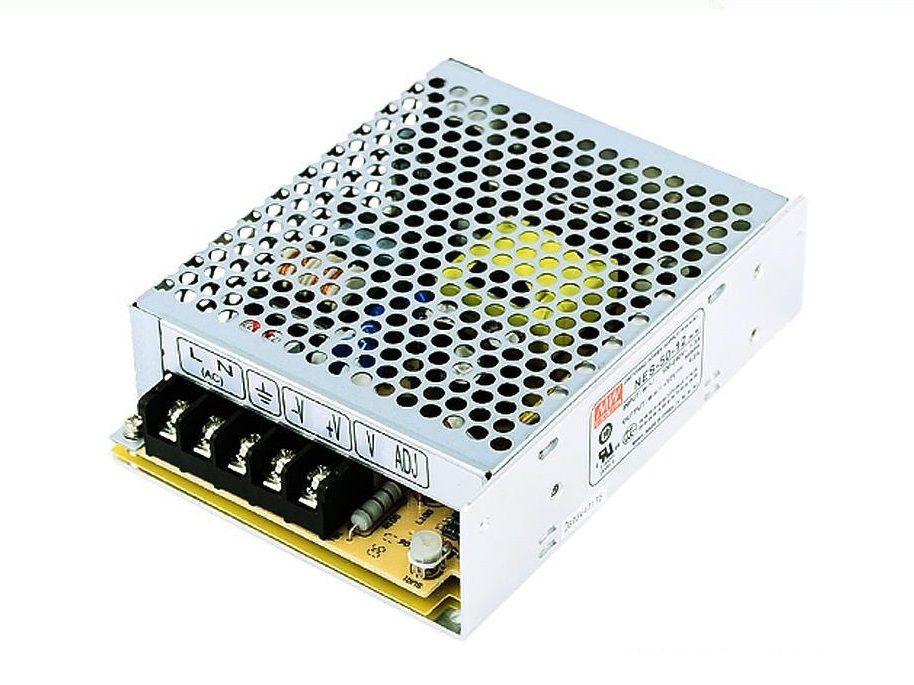
LED Switch power supply
LED Switch Power Supply (also known as a switching power supply or switch-mode power supply) is a device that converts AC (alternating current) power from a mains electrical source into DC (direct current) power required by LED lighting systems. These power supplies regulate the voltage and current, providing a consistent and stable output to power LED lights efficiently.


- 1
- 2
FAQS
LEDs require DC power to operate, but most household or commercial power sources supply AC. The switch power supply converts AC to DC and regulates the output voltage or current, ensuring the LEDs receive the correct power level.
Constant voltage power supply maintains a fixed output voltage (e.g., 12V or 24V) regardless of the current drawn by the load, while constant current power supply maintains a fixed current level and adjusts the voltage as needed to power the LEDs. Constant voltage is more common for LED strips, while constant current is used for some specific LED applications.
You need to select a power supply that matches the voltage and power requirements of your LED lights. If you're using 12V LED strips, choose a 12V power supply with enough wattage to support the total length of the strip.
Most switch power supplies have an efficiency rating between 85% and 90%, meaning they convert most of the input power into usable output while minimizing energy loss as heat.
First, check the wattage of the LED lights (e.g., per meter for LED strips). Multiply this by the total length or number of lights you plan to use. Add a 20-30% margin to ensure the power supply is not overloaded. For example, if your LED strip requires 100 watts, choose a power supply rated for at least 120 watts.
Yes, as long as the total power consumption of all the strips combined does not exceed the wattage rating of the power supply.
These power supplies typically include overload, over-current, over-voltage, and short-circuit protection to ensure safe operation and prevent damage to both the power supply and the connected LEDs.
The terms are often used interchangeably, but technically, an LED driver usually refers to a constant current power supply, while an LED power supply refers to a constant voltage unit.
Yes, but you need to ensure that the power supply and the LED lights are compatible with dimming systems. Some LED switch power supplies are dimmable, or you may need to use an external dimming controller.
If the power supply cannot provide enough wattage for the connected LEDs, the lights may flicker, dim, or fail to turn on completely. Additionally, an overloaded power supply could overheat and fail prematurely.
Yes, it is safe to use a power supply with a higher wattage rating than required, as the LEDs will only draw the power they need. However, it’s important to match the voltage exactly (e.g., 12V LED strips must use a 12V power supply).
High-quality LED switch power supplies are designed to operate quietly. Some models with active cooling (fans) may produce a slight noise, but most are silent due to passive cooling methods.
Connecting an LED strip with a higher voltage requirement (e.g., 24V) to a lower voltage power supply (e.g., 12V) will result in insufficient power, causing the LEDs to be dim or not turn on. Conversely, connecting a lower voltage LED to a higher voltage supply can damage the LEDs.
LED switch power supplies typically use passive cooling through heat sinks. Some higher-powered models may include active cooling with built-in fans to maintain a stable operating temperature.
Yes, switch power supplies are designed for continuous operation and can safely run 24/7, provided they are not overloaded or exposed to extreme environmental conditions.
Installation is typically straightforward. Mount the power supply in a well-ventilated area, connect the AC input to a power source, and connect the DC output terminals to the LED lights, ensuring that the voltage matches the LED requirements.