
How to wire a RGB LED Strip Light?
RGB LED strip lights are a flexible and colorful lighting solution for residential, commercial, and decorative projects. They create vibrant, customizable lighting effects, ideal for mood and accent lighting.
In this guide, we’ll walk you through wiring RGB LED strips using three common methods: normal connection, long connection, and DMX connection.
1. Normal Connection
The normal connection method is the simplest and most common way to wire RGB LED strips for small or regular projects.
1.1 How it works
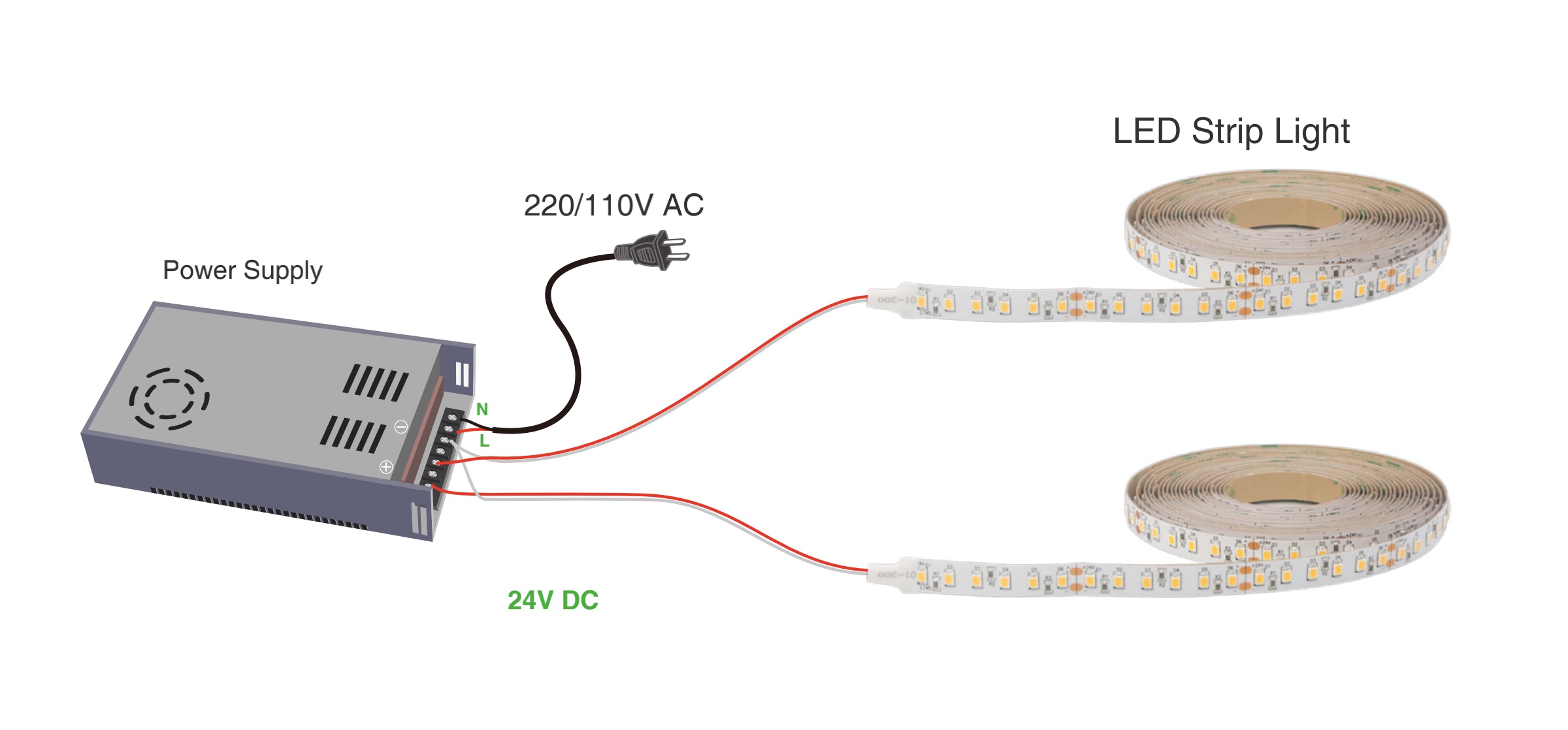
- The power supply converts AC power (220V/110V) into 24V DC output.
- The RGB controller receives the DC power and controls the color mixing by adjusting the Red, Green, and Blue channels.
- The RGB LED strips are connected directly to the controller and powered from the same supply.
1.2 Connection Diagram:

1.3 Connection Steps:
- Connect the AC input (220V/110V) to the power supply.
- Connect the 24V DC output from the power supply to the RGB controller.
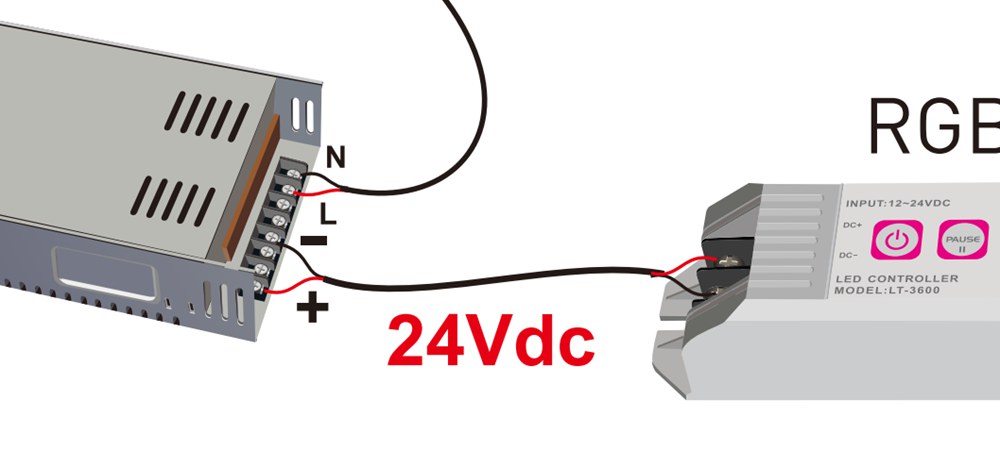
- Connect the RGB controller to the RGB LED strip.

1.4 Common Products:

- RGB LED controller

- RGB LED strips (5050/2835/3838)

- Remote or wall panel for control

2. Long Connection
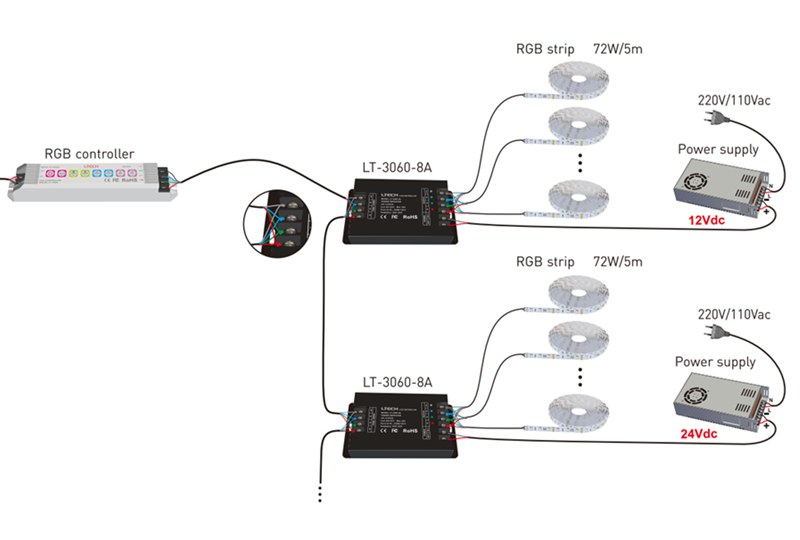
For longer runs of LED strips or larger projects, long connection is necessary to maintain consistent voltage and signal strength.
2.1 How it works
- The main RGB controller sends the control signals to the first strip section.
- CCT amplifiers repeat the signals for the next strip sections.
- Power supplies are added locally to avoid voltage drop over long distances and ensure each section is properly powered.
2.2 Connection Diagram:

2.3 Connection Steps:
- Connect the AC input to the power supply (24V DC).
- Connect the power supply to the RGB controller.
- Connect the controller to the RGB amplifier.

- Use RGB amplifiers to connect multiple sections of the LED strip.

- Add additional power supplies to ensure voltage is maintained across all connected strips.
2.4 Common Products:
RGB controller
RGB amplifiers
Additional power supplies
RGB LED strips (5050/3838)
3. DMX Connection
DMX is a more advanced control method used in professional lighting setups. It is widely used for large installations and projects that require centralized control.
3.1 How it works
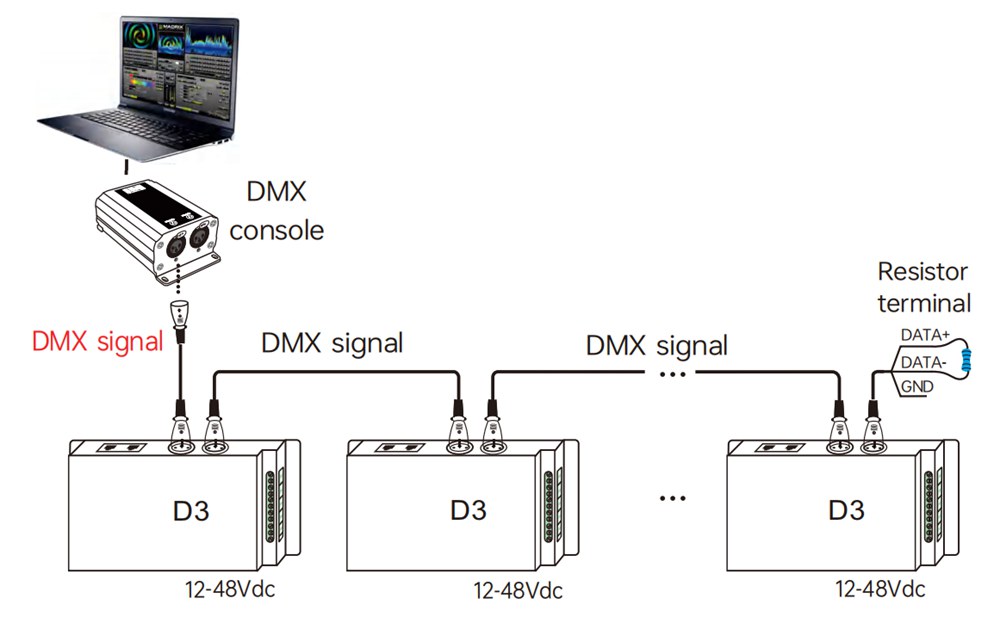
The DMX controller sends the digital signal to the DMX decoder.
The DMX decoder converts the signal into PWM output to control the RGB LED strips.
Multiple decoders can be linked for large installations.
3.2 Connection Diagram:
3.3 Connection Steps:
- Connect the AC input to the power supply.
- The DMX controller connects to the DMX decoder via a DMX cable.
- The decoder is then connected to the amplifier, which are powered by the 24V power supply.
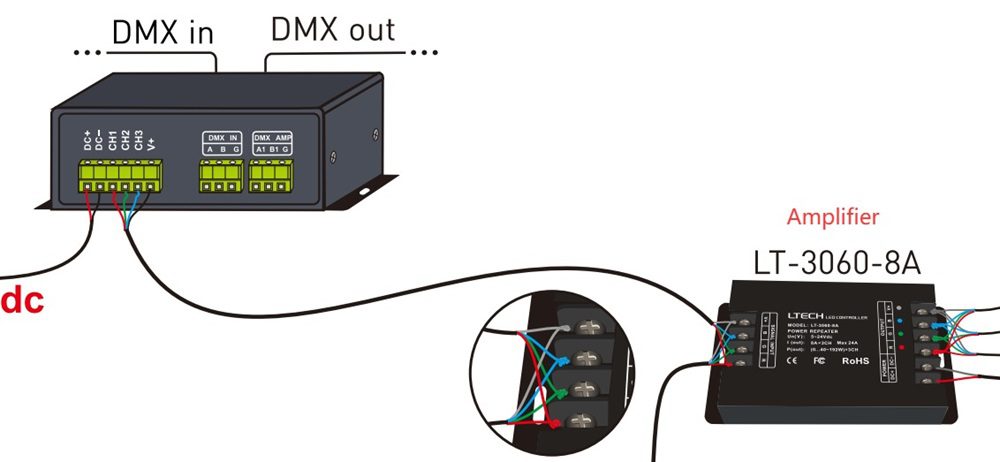
- The amplifier is then connected to the RGB LED strips
3.4 Common Products:
- DMX controller

- DMX decoder for RGB strips

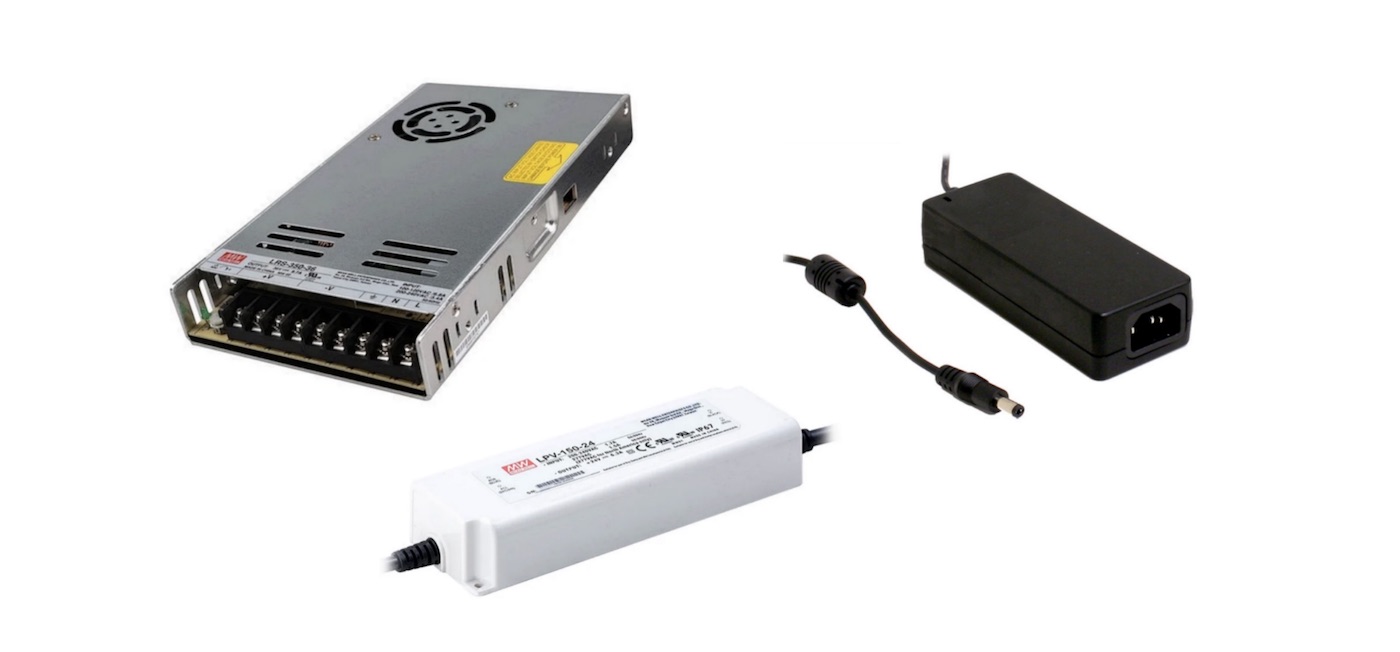
- LED Power supplies (24V)
- RGB LED strips (5050/3838)
4. Common Types of RGB LED Strips
RGB LED strips come in various configurations, each with its unique benefits. Here are the most common types based on LED package:
4.1 5050 RGB LED Strip
The 5050 RGB LED strip is one of the most common types used in residential and commercial projects. It provides high brightness and is often used for accent and mood lighting.

4.2 3838 RGB LED Strip
The 3838 RGB LED strip is a newer, more compact option that offers excellent color mixing and uniformity. It’s ideal for smaller installations and spaces with limited room for large strips.

5. FAQ
5.1. What is the difference between RGB and tunable white LED strips?
RGB strips offer full-color control, while tunable white LED strips allow you to adjust between warm and cool white, but without the full color spectrum.
5.2. Can I use an RGB controller for a tunable white LED strip?
No, RGB controllers are designed for color strips. For tunable white LED strips, you’ll need a CCT controller.
5.3. How many RGB LED strips can I connect to one controller?
It depends on the controller’s power rating. Ensure the total load of connected strips does not exceed the controller's output capacity.
5.4. Can I cut RGB LED strips to fit my space?
Yes, RGB LED strips can typically be cut at designated points (marked on the strip), but ensure you follow manufacturer guidelines to avoid damaging the strip.
5.5. What voltage do RGB LED strips typically use?
Most RGB LED strips operate on 5V or 12V or 24V DC.
5.6. How do I prevent voltage drop in long runs of RGB LED strips?
Use signal amplifiers and additional power supplies at various points along the strip to maintain even brightness and color.
5.7. Can I control multiple RGB LED strips with a single DMX controller?
Yes, you can connect multiple DMX decoders to one controller, provided they are properly addressed.
5.8. What is the maximum length of an RGB LED strip that can be powered from one end?
For 12V strips, it's typically about 5 meters. For 24V strips, up to 10 meters can be powered from one end.
9. Conclusion
Wiring RGB LED strips is easy, whether you choose the normal connection, long connection, or DMX connection method. By ensuring the correct components and wiring, you can enjoy vibrant, customizable lighting in any environment. Proper planning and product selection are key to successful installations.
How to Wire SPI Pixel Addressable LED Strip Light?
How to Use a 12V LED Strip in a 24V System Without Damaging It
Related Article



Need an Instant Quote For Your Upcoming Projects?
Send us the details and we will get back to you within 12 hours.