SPI vs DMX512 Addressable LED Strip: Which Control System Is Better for Professional Lighting Projects?
Addressable LED strips have become widely used in architectural lighting, commercial displays, stage lighting and creative installations.
Unlike traditional RGB LED strips, each pixel on an addressable LED strip can be controlled independently, allowing dynamic effects such as color changing, chasing, animation and video effects.
However, when designing a professional lighting project, one important decision must be made:
Should you choose an SPI addressable LED strip or a DMX512 LED strip?
Both systems can control individual pixels, but they are designed for different applications.
SPI focuses on flexible pixel control and cost-effective installations, while DMX512 is designed for professional lighting systems requiring long-distance communication and integration.
What Is SPI Addressable LED Strip?
SPI (Serial Peripheral Interface) is one of the most common control methods for addressable LED strips.
An SPI system sends digital data directly from the controller to the LED strip, allowing each IC or pixel group to display different colors and effects.
Common SPI ICs include:
- WS2811
- WS2812B
- WS2813
- WS2815
- SK6812
- SK9822
- APA102
- SM16703
- UCS1903
- TM1814
Depending on the IC design, SPI LED strips may use:
- Single data line
- Data + backup data
- Data + clock signal
SPI is widely used because it offers:
- Flexible IC selection
- High pixel density options
- Simple system structure
- Lower overall cost
What Is DMX512 Addressable LED Strip?
DMX512 is a professional lighting control protocol widely used in stage lighting, entertainment lighting and architectural projects.
Unlike a simple pixel controller system, DMX512 is designed to communicate with multiple lighting devices through a standardized control network.
A DMX512 LED strip can be integrated with:
- DMX consoles
- Lighting controllers
- Building automation systems
- Professional stage control systems
Common DMX512 LED strip types include:
- White DMX512 LED Strip
- RGB DMX512 LED Strip
- RGBW DMX512 LED Strip
- Tunable White DMX512 LED Strip
DMX512 is especially valuable when the LED strip is only one part of a larger professional lighting system.
SPI vs DMX512: Main Differences
| Feature | SPI Addressable LED Strip | DMX512 LED Strip |
| Control method | Direct pixel data transmission | Professional lighting protocol |
| System complexity | Simple | More advanced |
| Cost | Lower | Higher |
| Installation | Easier | Requires DMX system knowledge |
| Communication distance | Short-medium distance | Long distance |
| Controller | SPI pixel controller | DMX controller/console |
| Pixel control | Individual pixel control | Individual/group control |
| Application | Decorative & creative lighting | Professional projects |
1. Control Distance and Signal Transmission
SPI
SPI sends control data directly to the LED strip.
Advantages:
- Fast response
- High refresh rate
- Suitable for high-density pixels
However, because the signal travels directly through the strip, the practical distance is usually more limited.
For longer installations, signal amplifiers or repeaters may be required.
DMX512
DMX512 is designed for longer communication distances.
It uses a standardized communication network and can connect multiple lighting devices over longer distances.
This makes DMX512 suitable for:
- Building facades
- Large entertainment venues
- Hotels
- Stage systems
2. System Integration
SPI Applications
SPI is usually selected when the LED strip itself is the main lighting element.
Typical applications:
- Decorative lighting
- Retail displays
- Signage
- Furniture lighting
- Creative installations
Example:
A store wants a dynamic RGB LED strip behind shelves with changing effects.
An SPI system is usually enough.
DMX512 Applications
DMX512 is preferred when the LED strip needs to communicate with a complete lighting system.
Typical applications:
- Architectural lighting
- Hotels
- Theme parks
- Stage lighting
- Large commercial projects
Example:
A building facade requires thousands of lighting points synchronized with other lighting equipment.
DMX512 provides easier system management.
3. Wiring Difference

SPI Wiring
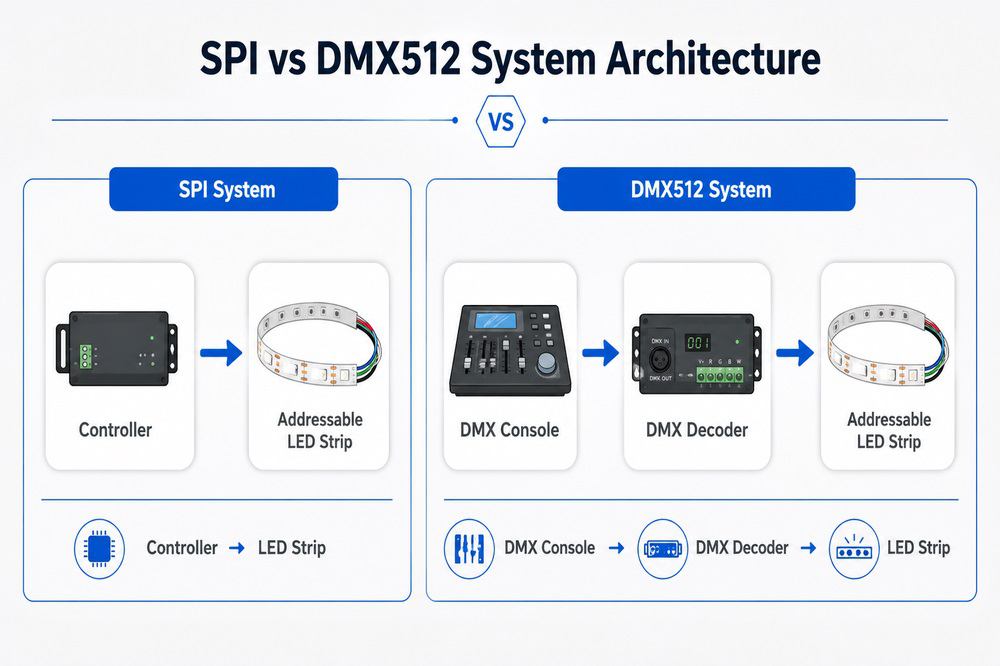
Typical SPI connection:
Controller → Data Signal → LED Strip
Common wires:
- Power
- Ground
- Data
Some ICs also include:
- Backup data
- Clock signal
SPI systems are usually simpler for small and medium projects.
DMX512 Wiring
DMX512 usually requires:
- DMX controller
- DMX signal cable
- Address setting
- Power supply system
The installation process is more complex, but it provides better system scalability.
4. Pixel Density and Effect Requirements
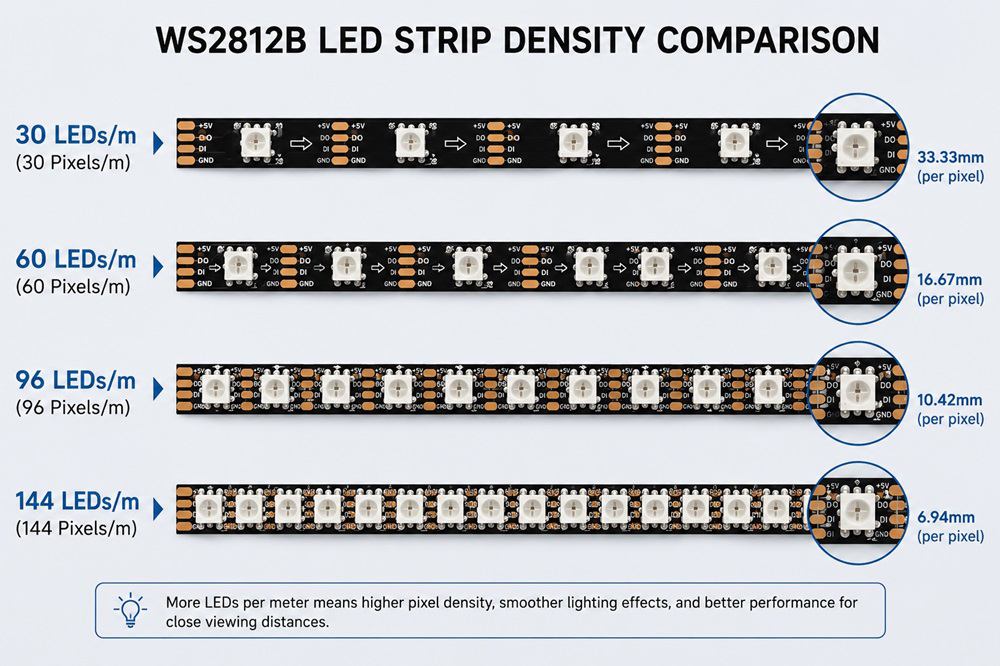
SPI generally has more flexibility when designing high-density pixel effects.
Examples:
- 60 pixels/m
- 96 pixels/m
- 144 pixels/m
High-density SPI strips are commonly used for:
- Animation effects
- Video lighting
- Creative displays
DMX512 is more focused on system control and reliability rather than extremely high pixel density.
5. Cost Comparison
Generally:
SPI
Advantages:
- Lower IC cost
- Lower controller cost
- Easier installation
Suitable for projects where budget and flexibility are important.
DMX512
Advantages:
- Professional control
- Better integration
- Long-distance reliability
The initial cost is higher, but it provides advantages for large projects.
Which One Should You Choose?

Choose SPI Addressable LED Strip When:
✔ You need dynamic lighting effects
✔ The installation distance is limited
✔ High pixel density is required
✔ Cost efficiency is important
✔ The project uses independent LED controllers
Typical projects:
- Retail lighting
- Signage
- Decorative lighting
- Creative installations
- Entertainment products
Choose DMX512 LED Strip When:
✔ The project requires professional lighting control
✔ Multiple lighting devices need synchronization
✔ Long-distance communication is required
✔ The system needs integration with existing DMX equipment
Typical projects:
- Architectural lighting
- Hotels
- Stage lighting
- Theme parks
- Large commercial installations
Can SPI and DMX512 Be Used Together?
Yes.
Many professional projects combine both systems.
For example:
A building lighting project may use:
DMX512 → Main lighting control system
↓
SPI Controller → Local high-density pixel LED strip
This combination allows professional system management while maintaining flexible pixel effects.
How to Select the Right Addressable LED Strip?

Before choosing SPI or DMX512, consider:
| Requirement | Recommended Solution |
| Small decorative project | SPI |
| High-density animation | SPI |
| Retail display | SPI |
| Building facade | DMX512 |
| Stage lighting | DMX512 |
| Existing DMX system | DMX512 |
| Custom OEM project | Depends on system requirements |
Conclusion
Both SPI and DMX512 addressable LED strips can create impressive dynamic lighting effects, but they are designed for different applications.
SPI provides flexibility, high pixel density and cost-effective solutions for creative lighting projects.
DMX512 provides professional control, long-distance communication and better integration for large-scale lighting systems.
The best choice depends on the complete project requirements, including installation distance, control system, pixel density, budget and application environment.
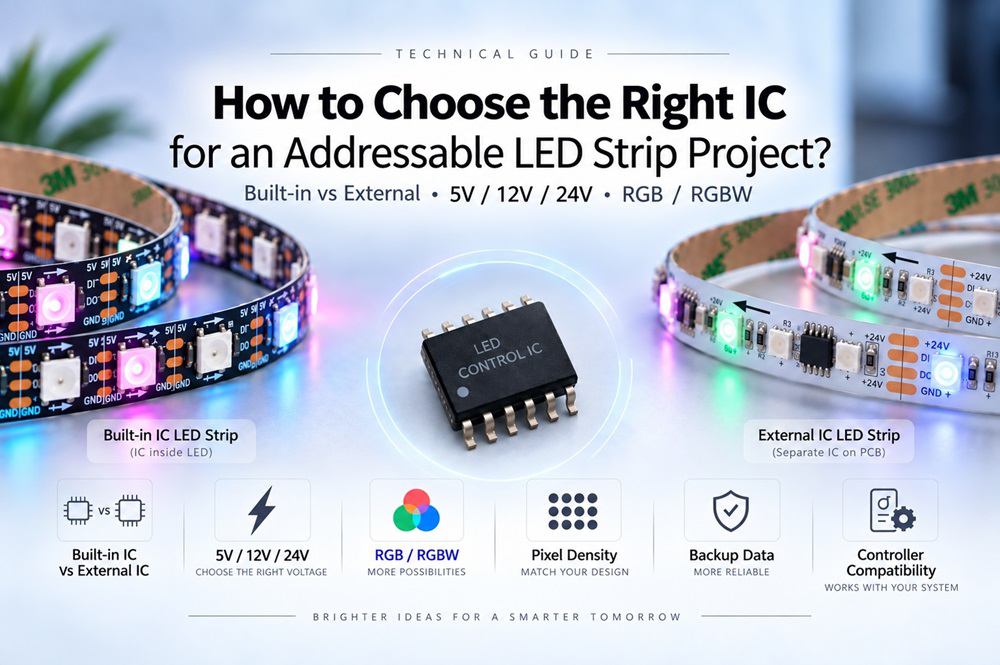
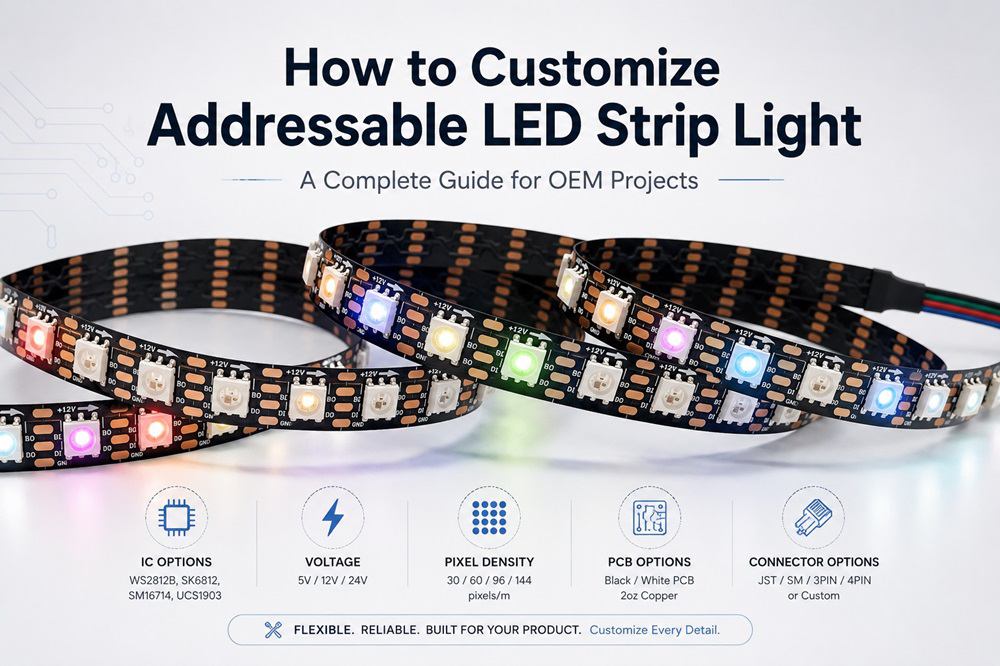
For OEM projects, addressable LED strips can be customized with different ICs, voltage options, RGB/RGBW configurations, pixel densities and control solutions to meet specific lighting requirements.
High Efficacy COB LED Strip: When Does Higher lm/W Really Matter?
How to Customize Addressable LED Strip Light: A Complete Guide for OEM Projects
Related Article
Need an Instant Quote For Your Upcoming Projects?
Send us the details and we will get back to you within 12 hours.