
5050 vs 3528 vs 2835 LED Strips: Which One is Right for You?
LED strips have become a popular choice for both residential and commercial lighting due to their versatility, energy efficiency, and ease of installation. Among the many types available, 5050, 3528, and 2835 LED strips stand out for their unique features and applications. This guide will help you understand the differences between these types of LED strips, allowing you to choose the best option for your specific needs.
What are 5050 LED Strips?

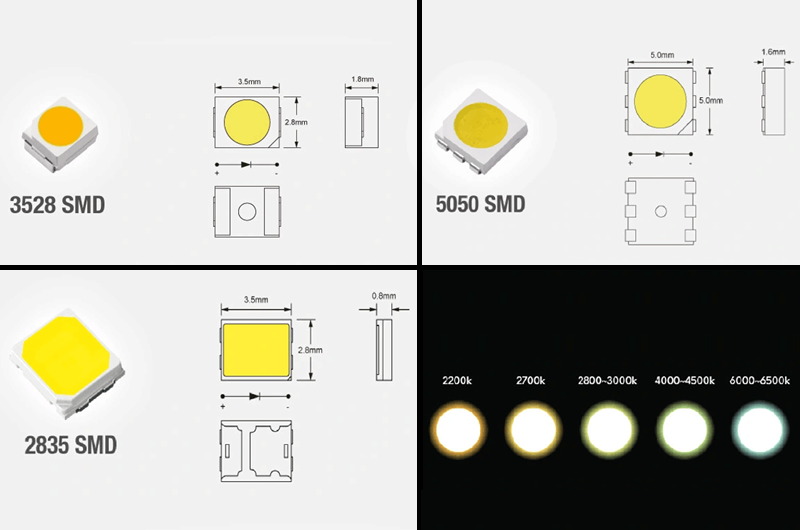
5050 LED strips feature LED chips that are 5.0mm x 5.0mm in size. These chips are larger than those found in 3528 and 2835 LED strips, allowing them to house three diodes per chip. This configuration enables 5050 LED strips to produce more light and support RGB color mixing, making them ideal for vibrant, colorful lighting effects. Due to their higher power output, 5050 LED strips are often used in areas requiring bright illumination, such as kitchens, living rooms, and outdoor spaces.
What are 3528 LED Strips?

3528 LED strips use smaller LED chips, each measuring 3.5mm x 2.8mm. These strips have a single diode per chip, which means they typically produce less light than 5050 LED strips. However, they are more energy-efficient and generate less heat. 3528 LED strips are ideal for accent lighting, cove lighting, and applications where a softer, more subtle light is desired. Their lower power consumption makes them a cost-effective option for continuous or long-term use.
What are 2835 LED Strips?

2835 LED strips are a newer development in LED technology, featuring chips that measure 2.8mm x 3.5mm. These strips offer a higher light output and greater efficiency compared to 3528 LED strips, while still being more compact than 5050 strips. 2835 LED strips are designed to provide a good balance between brightness and energy efficiency, making them suitable for a wide range of applications, from general room lighting to task lighting in workspaces.
Key Differences Between 5050, 3528, and 2835 LED Strips

The primary differences between 5050, 3528, and 2835 LED strips lie in their chip size, light output, and energy consumption.
| Feature | 5050 LED Strips | 3528 LED Strips | 2835 LED Strips |
| Chip Size | 5.0mm x 5.0mm | 3.5mm x 2.8mm | 2.8mm x 3.5mm |
| Light efficiency | 95lm/W for white color | 90lm/W | 100-210lm/W |
| Power Consumption | Middle | Lowest | Middle & High |
| Heat Generation | Middle | Lowest | Middle & High |
| Color Options | Single color/Dual White /RGB/RGBW/RGB CCT | Single color/Dual White | Single color/Dual White/RGB |
| Best Applications | High brightness needs, RGB effects, outdoor lighting | Accent lighting, cove lighting, ambient lighting | General lighting, task lighting, retail displays |
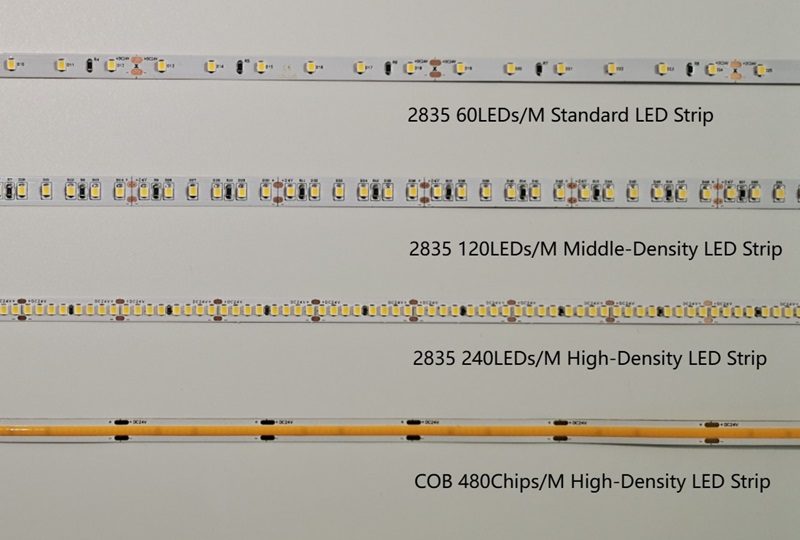
| LED QTY/M | 30-120LEDs/M | 30-240LEDs/M | 30-480LEDs/M |
| Cost | Highest | Middle | Low |
Why 2835 LED Strips Are More Popular Than 3528 and 5050 LED Strips for Single-Color Applications?

The popularity of 2835 LED strips over 3528 and 5050 strips for single-color applications can be attributed to their superior brightness, energy efficiency, improved heat dissipation, cost-effectiveness, and versatility. These advantages make 2835 LED strips a compelling option for a wide range of lighting needs, from residential to commercial applications. When looking for single-color LED strips, the 2835 option provides the best balance of performance, efficiency, and value.
Superior Brightness and Efficiency
One of the primary reasons 2835 LED strips have gained popularity over 3528 and 5050 strips for single-color applications is their superior brightness and efficiency. 2835 LED chips are designed to produce higher lumens per watt, resulting in a brighter light output with lower energy consumption. This makes them an ideal choice for various lighting needs, from general room lighting to task lighting, where both brightness and energy efficiency are crucial.
For normal 3528 led strip, the light efficiency is only 90lm/W; For normal 5050 led strip, the light efficiency is only 95lm/W; While for 2835 led strip, it’s 100lm/W for standard type, there are more higher light efficiency version like 210lm/W, 195lm/W, 180lm/W, 160lm/W and 140lm/W.

Improved Heat Dissipation
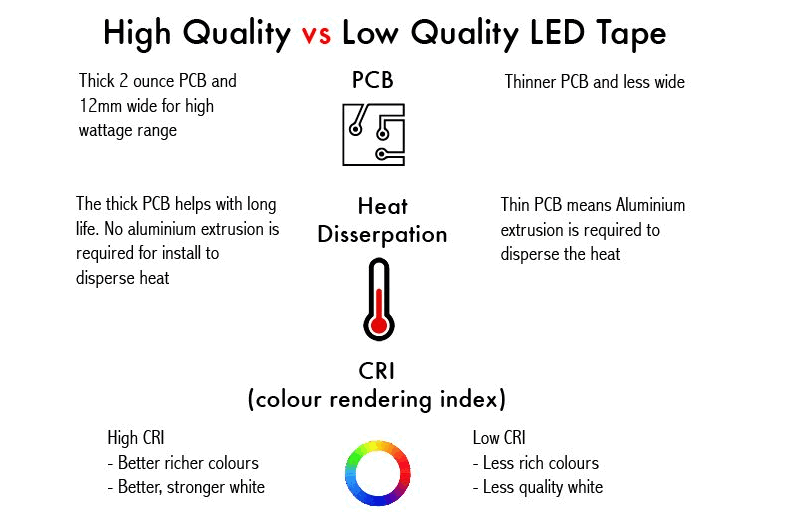
2835 LED strips also excel in heat dissipation compared to their 3528 and 5050 counterparts. The design of the 2835 chip includes a larger heat sink area, which helps in dispersing heat more effectively. Efficient heat management is essential for maintaining the longevity and performance of LED strips, as excessive heat can lead to premature failure and reduced brightness over time.
In comparison, 3528 LED strips generate less heat due to their lower power consumption but also produce significantly less light. On the other hand, 5050 LED strips, while bright, tend to generate more heat due to their larger chip size and higher power consumption. Thus, the 2835 strips offer an optimal balance of brightness, efficiency, and heat management.
Cost-Effectiveness
Another factor contributing to the popularity of 2835 LED strips is their cost-effectiveness. Despite offering higher brightness and efficiency, 2835 strips are often priced competitively with 3528 and 5050 strips. This makes them an attractive option for consumers who want the best performance without breaking the bank.
The cost savings are not just in the initial purchase price but also in the long-term operational costs. The higher energy efficiency of 2835 LED strips means lower electricity bills, and their improved heat dissipation translates to a longer lifespan, reducing the need for frequent replacements.
Versatility and Applications
2835 LED strips are versatile and suitable for a wide range of applications. Their high brightness makes them ideal for primary lighting in rooms, offices, and commercial spaces. They are also perfect for task lighting in kitchens, workstations, and garages where focused and bright light is necessary. Additionally, the slim profile and flexibility of 2835 LED strips make them easy to install in various settings, including tight spaces and intricate designs.
In contrast, 3528 LED strips are better suited for accent and ambient lighting due to their lower brightness, while 5050 LED strips are often reserved for applications requiring RGB color mixing and effects. For single-color applications, the versatility and superior performance of 2835 LED strips make them the preferred choice.
Why 5050 LED Strips Are More Popular Than 3528 and 2835 LED Strips for Color Applications?

5050 LED strips are popular for color applications due to their versatile RGB color mixing, high brightness, enhanced color effects and control, robust design, and overall value. These features make 5050 LED strips the go-to choice for vibrant and dynamic lighting projects, from residential and commercial spaces to entertainment venues and outdoor installations.
Versatile RGB Color Mixing
5050 LED strips excel in RGB color mixing, with each chip containing red, green, and blue diodes. This allows for a wide range of colors and dynamic effects, making them ideal for vibrant and customizable lighting projects. In contrast, 3528 and 2835 strips typically feature single-color diodes, limiting their color flexibility.
High Brightness and Power
5050 LED strips are known for high brightness due to their larger chips, producing more light than 3528 and 2835 strips. This makes them suitable for applications requiring bright, colorful illumination, such as stage lighting and decorative lighting. Their brightness ensures vivid colors even in well-lit environments.
Enhanced Color Effects and Control
5050 LED strips offer advanced control options, allowing adjustments in color, brightness, and lighting patterns. They support effects like color fading and flashing, providing extensive creative possibilities. This makes them popular among designers for creating unique lighting displays.
Robust and Durable Design
5050 LED strips are robust and durable, suitable for demanding environments like outdoor installations and commercial settings. Their larger chip size and multiple diodes enhance their strength and longevity, ensuring consistent performance.
Cost Considerations
While more expensive, 5050 LED strips offer superior brightness and color mixing capabilities, justifying the higher cost for projects needing high-quality color lighting. They provide better overall performance and impressive results compared to 3528 and 2835 strips.
Why 3528 LED Strips Are Not So Popular Now?

Lower Brightness and Efficiency
3528 LED strips, with their smaller chips (3.5mm x 2.8mm), produce around 400-700 lumens per meter. This is significantly lower compared to newer models like 2835 LED strips, which offer 1500-2000 lumens per meter. As lighting needs evolve, people prefer brighter and more efficient solutions, making 3528 strips less desirable.
Limited Color Options
3528 LED strips are generally single-color and do not support RGB color mixing, limiting their versatility. In contrast, 5050 LED strips can produce a wide range of colors and dynamic effects, making them more appealing for decorative and ambient lighting.
Heat Management
While 3528 strips generate less heat than 5050 strips, they are outperformed by 2835 strips in heat dissipation. The better thermal efficiency of 2835 strips makes them more reliable and durable, leading to a preference for these over 3528 strips.
Technological Advancements
Newer LED strips like 2835 and 5050 have benefited from advancements in LED technology, offering better performance and efficiency. 3528 LED strips have not seen the same level of innovation, making them appear outdated.
Market Demand
Consumer demand has shifted towards LED strips that offer more features, higher performance, and greater energy efficiency. This has led manufacturers to focus on producing and promoting advanced LED strips, leaving 3528 strips behind.
FAQs:
1. Which LED strip is the brightest?
2835 LED strips are typically the brightest, producing 1500-2000 lumens per meter, compared to 1000-1500 lumens for 5050 strips and 400-700 lumens for 3528 strips.
2. Can I dim 5050, 3528, and 2835 LED strips?
Yes, you can dim all these LED strips. Ensure you use a compatible dimmer and power supply designed for LED strips to achieve smooth dimming effects.
3. Can 5050 LED strips change colors?
It depends on the types of 5050 led strip light.
For single white 5050 led strip, they can only be dimmed, don’t have the ability to change colors.
For RGB 5050 LED strips, they can change colors because each chip contains three diodes (red, green, and blue), allowing for RGB color mixing.
4. Are 3528 LED strips suitable for accent lighting?
Yes, 3528 LED strips are ideal for accent lighting due to their lower brightness and energy efficiency. They provide a soft, ambient light. Yet, we can also control the power of 2835 led strip to reach same brightness and get same light effect. What’s more, the cost is even lower which the quality is same.
5. Can I use 2835 LED strips for outdoor lighting?
Yes, you can use 2835 LED strips for outdoor lighting, provided they have an appropriate waterproof rating (e.g., IP65 or IP67) to withstand the elements.
6. Are 3528 LED strips outdated?
While 3528 LED strips are less popular due to lower brightness and fewer features compared to newer models, they are still useful for specific applications like accent lighting.
7. Can I cut 5050, 3528, and 2835 LED strips to fit my space?
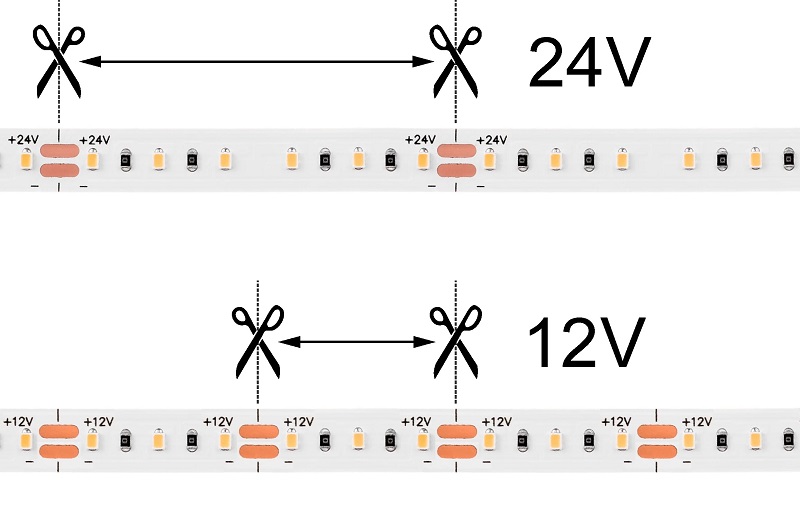
Yes, all these LED strips can be cut to fit your space. Follow the manufacturer's guidelines and cut only at designated points to avoid damaging the strips.
8. Do I need a special controller for RGB LED strips?
Yes, for RGB LED strips like 5050, you need a special controller to adjust colors and create lighting effects. Ensure the controller is compatible with your LED strips.
9. How do I ensure proper heat dissipation for my LED strips?
Ensure proper heat dissipation by using aluminum profiles or heat sinks, especially for high-power strips like 5050. Good ventilation and avoiding enclosed spaces can also help manage heat.
10. Are there any special installation tips for these LED strips?
Clean the surface before installation, use proper adhesive or mounting clips, and ensure all connections are secure. For 5050 strips, make sure to use adequate heat management to prevent overheating.
Conclusion
Understanding the differences between 5050, 3528, and 2835 LED strips is crucial for selecting the right type for your lighting project. Each LED strip type has unique features, advantages, and applications. 5050 LED strips are ideal for high brightness and RGB color effects, making them perfect for vibrant and dynamic lighting setups. 3528 LED strips, while less bright, offer excellent energy efficiency and are great for accent and ambient lighting. On the other hand, 2835 LED strips provide a balance of high brightness and efficiency, making them versatile for various applications.
By considering factors such as brightness, energy efficiency, heat management, and color options, you can choose the LED strip that best meets your needs. Whether you're looking to enhance your home decor, improve workspace lighting, or create stunning outdoor displays, understanding these key differences will help you make an informed decision. With the right LED strip, you can achieve the perfect lighting effect for any setting.
The Ultimate Guide To Addressable LED Strip in 2026
LED Strips on Metal Surfaces: Everything You Need to Know
Related Article
Need an Instant Quote For Your Upcoming Projects?
Send us the details and we will get back to you within 12 hours.