
LED Light Sheets vs LED Strip Lights
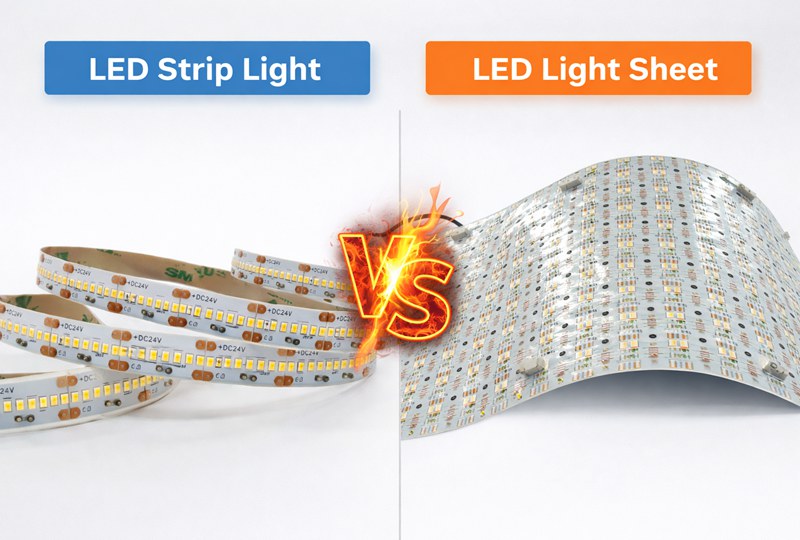
In modern lighting design, LED light sheets and LED strip lights are two of the most popular lighting solutions. Both offer energy efficiency, sleek design, and versatility, but they differ significantly in terms of design, light distribution, installation ease, and ideal applications. Understanding these differences is crucial to choosing the right lighting solution for your project.
How Do LED Light Sheets and LED Strip Lights Work?
Both LED light sheets and LED strip lights work on the same basic principle of LED technology, but they differ significantly in how they distribute light and their physical design.
LED Strip Lights:
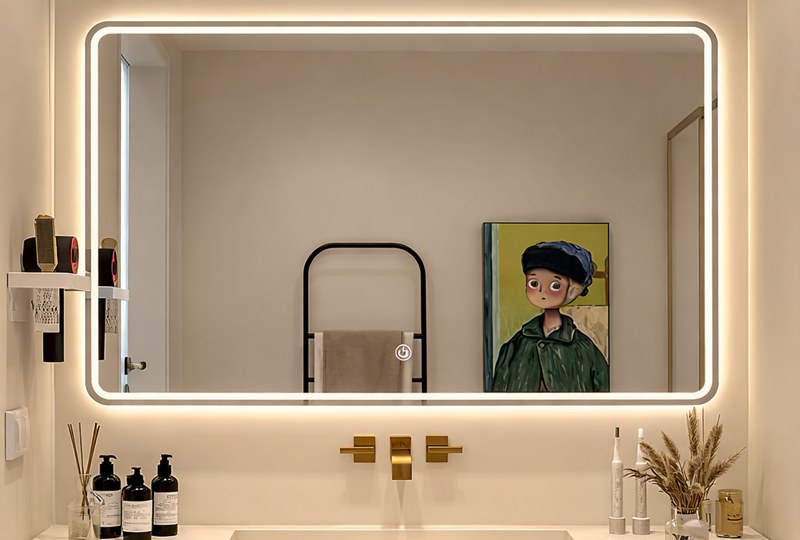
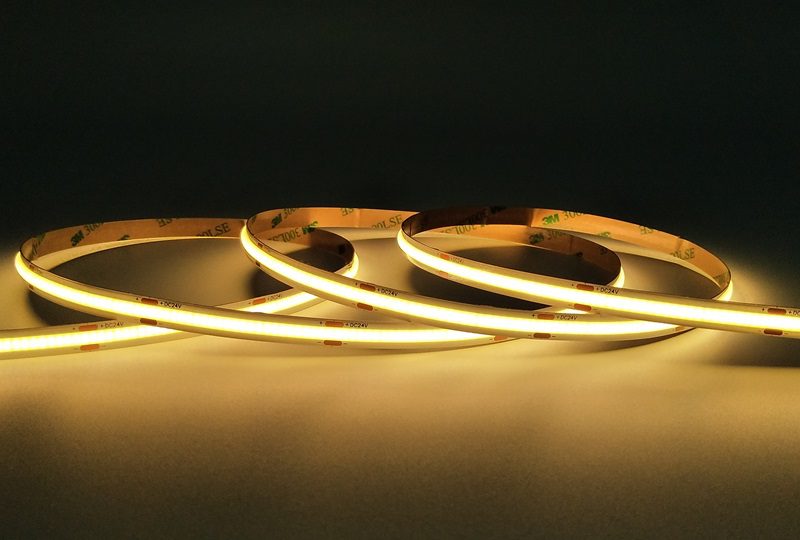
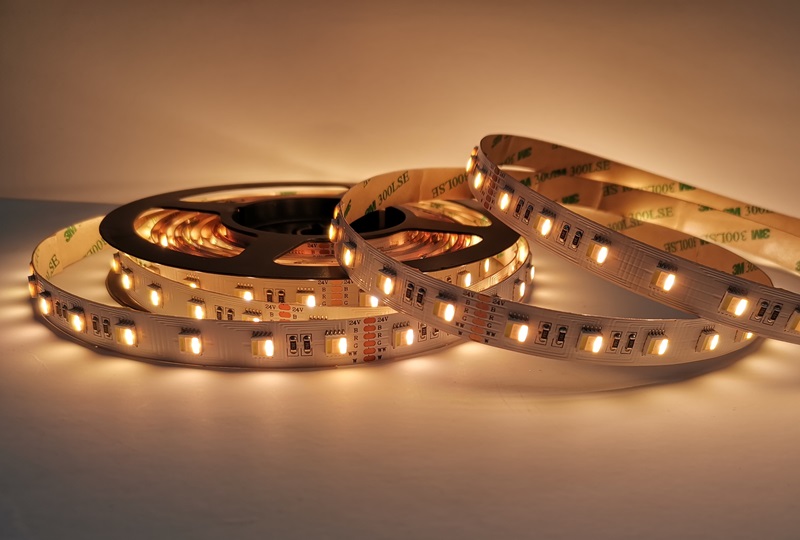
LED strip lights are narrow, flexible boards populated with multiple surface-mount LEDs. They provide linear, directional light, ideal for highlighting features such as edges, corners, or architectural lines. This lighting effect is typically more focused, making them perfect for creative DIY projects and accent lighting.
LED Light Sheets:
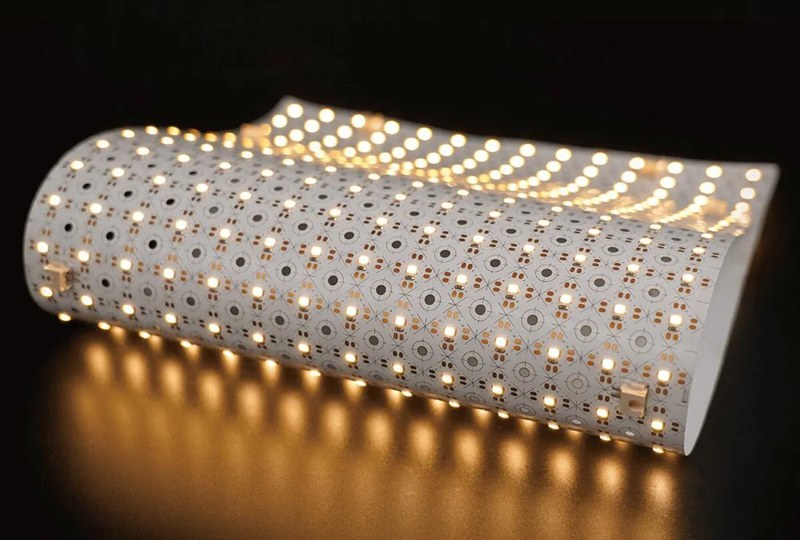
LED light sheets, on the other hand, are ultra-thin, flexible panels with an evenly distributed grid of LEDs. These sheets provide wide, uniform light coverage, making them suitable for applications requiring consistent, shadow-free illumination. They function more like a surface light source, providing broad light output rather than a narrow line of light.
Design, Application, and Aesthetic Differences

| Feature | LED Strip Lights | LED Light Sheets |
| Primary Purpose | Accent and decorative lighting | Task and uniform lighting |
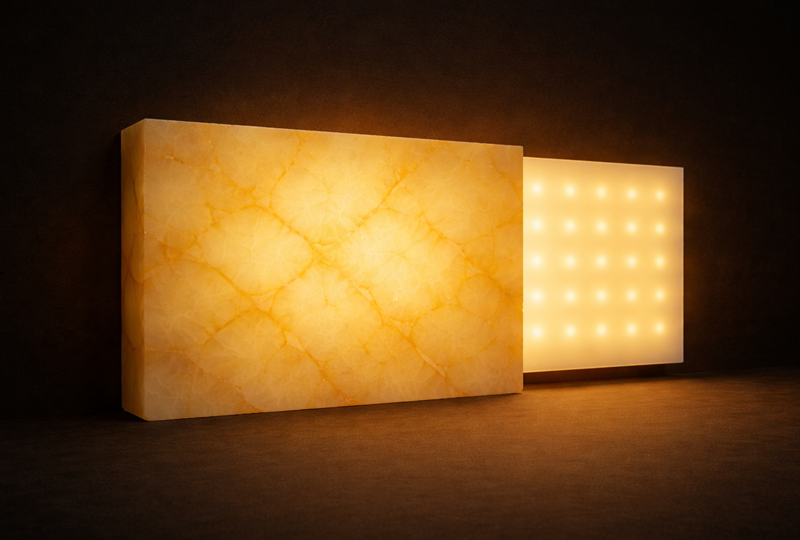
| Application Scenarios | Under-cabinet kitchen lighting, ceiling cove lighting, TV and monitor backlighting, staircase and hallway lighting, RGB effects for gaming and entertainment setups | Backlit signage and lightboxes, retail displays and exhibition panels, photography and video lighting panels, uniform shelf or display case lighting, large architectural feature walls |
| Lighting Effect | High brightness, strong directionality, ideal for highlighting and decoration | Even, shadow-free illumination, ideal for large surface areas requiring uniform lighting |
| Flexibility | Very high, can be used in curved, angled, or tight spaces | Lower, typically used for large, flat surfaces |
Brightness and Diffusion: Which One Offers Better Light Quality?
Both LED light sheets and LED strip lights provide bright illumination, but they manage light very differently.
LED Strip Lights:
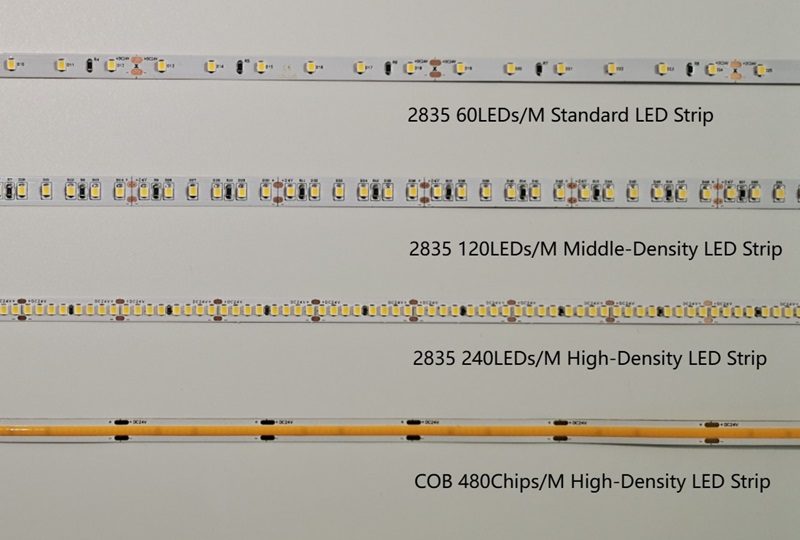
Brightness: LED strip brightness is typically measured in lumens per meter and can vary depending on the LED density. High-density strips produce more light, but the brightness is usually more concentrated in a line.
Diffusion: Without diffusers, individual LED "hot spots" may be visible. To achieve a smoother and more even light distribution, LED strips generally require diffusers.
LED Light Sheets:
Brightness: LED light sheets generally offer a higher total lumen output over a larger area, making them ideal for applications that need broad, consistent illumination.
Diffusion: Like LED strips, LED light sheets require external diffusers to create a uniform and smooth light output. Without proper diffusion, you may still see individual LED "hot spots." The diffusers help to evenly spread the light across a surface, ensuring a shadow-free and uniform glow.
Cost and Installation Comparison

Both LED light sheets and LED strip lights offer cost-effective lighting solutions, but the price and installation complexity differ. The following table highlights these differences:
| Feature | LED Strip Lights | LED Light Sheets |
| Upfront Cost | Generally more affordable, especially for smaller or DIY projects. | Higher initial cost due to additional materials and built-in diffusion technology. |
| Installation | Highly flexible and DIY-friendly. Can be mounted with adhesive backings and cut to length, ideal for tight spaces or curved surfaces. | Requires a flat surface for mounting. May need professional help for larger panels, but provides a polished, professional finish once installed. |
| Cost-Effectiveness | Best for covering long, narrow areas or small spaces where a continuous sheet might not be practical. | More cost-effective for larger areas requiring uniform lighting, as one large sheet can replace multiple strips. |
Which One is Right for Your Project?
To help you make the best choice for your project, here is a quick guide:
1. What is the primary goal of your lighting?
To highlight and create decorative effects? Choose LED strip lights.
To provide uniform, shadow-free lighting across a large surface? Choose LED light sheets.
2. What is the shape of your area?
Long, narrow, curved, or complex angles? Choose LED strip lights.
A large, flat, rectangular or square area? Choose LED light sheets.
3. How important is a perfectly uniform glow?
Are visible LED spots or a diffuser acceptable? Choose LED strip lights.
Do you need flawless, dot-free lighting? Choose LED light sheets.
Summary
LED Strip Lights are champions of flexibility and accent lighting. They are perfect for creative DIY projects and spaces that require dynamic lighting effects. Their small, customizable form factor allows them to fit into tight corners, curves, or under shelves.
LED Light Sheets are ideal for providing consistent, professional-grade illumination. They work best for large-scale projects, such as backlit signage, retail displays, and architectural lighting, where even lighting is essential.
By understanding the differences between LED strip lights and LED light sheets, you can ensure your lighting solution meets your project’s needs.
COB LED Strip Twisting Test Report: 2000 Cycles with No Dead LEDs or Flickering
High-Density LED Strip vs Standard LED Strip Lights
Related Article
Need an Instant Quote For Your Upcoming Projects?
Send us the details and we will get back to you within 12 hours.