
Backlit Marble Using LED Light Sheets: Brightness, Thickness, and Cavity Depth Explained
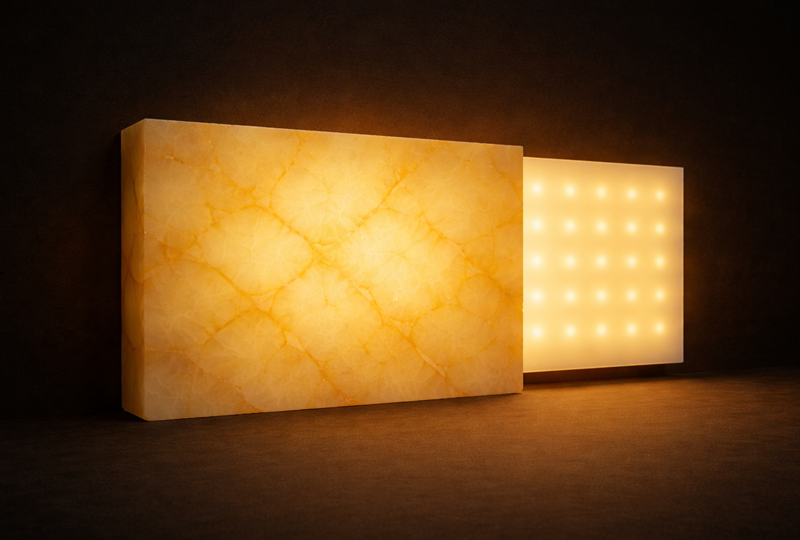
Backlit marble combines natural stone with architectural lighting to create a refined and dramatic visual effect. To achieve a smooth and high-end result, two factors matter most: LED sheet brightness and the relationship between marble thickness and installation depth.
This guide explains how to design backlit marble using LED light sheets, with a focus on lumen output, stone thickness, and LED-to-marble spacing.
What Is Backlit Marble?
Backlit marble is a system in which a light source is installed behind a marble slab or panel so that light passes through the stone and reveals its veining, tone variation, and natural translucency.
The goal is not to make the marble look harsh or overexposed. The goal is to create a balanced glow that feels smooth, premium, and natural. That balance depends heavily on selecting the right lighting system and matching it to the actual stone.
Why Use LED Light Sheets for Backlit Marble?
1. Uniform illumination
LED light sheets help create even light distribution behind marble and reduce visible hotspots.
2. Easy installation
With 3M adhesive backing, LED light sheets are easy to install. They can also be connected with cables between sheets, without soldering.
3. Customizable design
LED light sheets can usually be cut or configured to match specific project dimensions.
4. Energy efficient
LED light sheets consume less power while providing strong and stable brightness.
5. Dimmable options
Many LED light sheets support dimming for better control of brightness and atmosphere.
Types of LED Sheet
Not all LED sheets are the same. The right type depends on the marble itself, the required brightness, the desired lighting effect, and the function of the space.
1. Single Color LED Sheet
Provides a fixed white color temperature, such as 2700K, 3000K, 4000K, or 6000K.

2. Tunable White LED Sheet
Allows adjustment of color temperature from warm white to cool white.

3. RGB LED Sheet
Provides color-changing lighting with red, green, and blue output.

4. RGBW LED Sheet
Combines RGB color-changing lighting with a dedicated white LED.

5. RGB CCT LED Sheet
Combines RGB color control with adjustable white color temperature.

6. Pixel LED Sheet
Allows individual or grouped LED control for dynamic lighting effects.

Why LED Sheet Brightness Matters
The required brightness of an LED sheet depends on several factors:
1)Marble thickness
2)Stone translucency
3)Colour density
4)Veining pattern
5)Cavity depth behind the stone
6)Whether a diffuser layer is used
A lightly veined translucent marble may need only moderate output to create a refined glow. A denser or thicker slab may require much higher lumen density to achieve the same visible effect.
In other words, LED sheet brightness should be selected according to light transmission, not guesswork.
The Relationship Between Marble Thickness and Brightness

As marble thickness increases, light transmission generally decreases. That means thicker marble usually needs a brighter LED sheet behind it.
But higher brightness alone is not enough. As the stone gets thicker, it also becomes more important to manage light blending properly. Otherwise, the installation may still show hotspots, uneven patches, or dead-looking areas.
A practical way to think about it is this:
Thinner marble = lower brightness requirement, but hotspots are more likely if the LEDs are too close
Thicker marble = higher brightness requirement, but deeper installation space is usually needed to blend the light evenly
The ideal design is a balance between output and spacing.
The Relationship Between Marble Thickness and Cavity Depth
In backlit stone design, “height” is usually best understood as the depth of the cavity behind the marble, or the distance between the LED sheet and the stone.
This distance matters because the light needs room to spread before it hits the marble. If the LED sheet is too close, individual diodes may become visible as bright points. If the cavity is too shallow, the stone may glow unevenly. If the cavity is deeper, the light has more space to blend, producing a smoother appearance.
As a general rule:
The thicker and less translucent the marble, the more carefully the cavity depth must be planned
The denser the LED layout, the less risk of spotting
The shallower the cavity, the more likely a diffuser layer will be needed
So the relationship is not just “thicker marble needs brighter LEDs.” It is also that thicker marble usually requires better light mixing conditions.
Recommended Brightness and Cavity Depth by Marble Thickness
The table below gives a practical reference range for backlit marble projects. These values should always be verified through mock-up testing, because natural stone varies significantly from slab to slab.
| Marble Thickness | Typical Light Transmission | Recommended LED Sheet Brightness | Recommended Cavity Depth |
| 10–12 mm | relatively high | 3,500–4,500 lm/m² | 30–50 mm |
| 15 mm | moderate | 4,000–5,500 lm/m² | 40–60 mm |
| 20 mm | moderate to low | 5,000–6,500 lm/m² | 50–80 mm |
| 25 mm | low | 6,000–7,500 lm/m² | 80–100 mm |
| 30 mm+ | very low | 7,500–8,500+ lm/m² | 100 mm+ |
These are not fixed rules. They are starting points. A highly translucent white marble may perform better than expected, while a darker or heavily veined slab may need more output than its thickness alone suggests.
Why More Brightness Does Not Always Solve the Problem
In many failed installations, the designer tries to compensate for poor layout by simply increasing LED power. This often creates new problems.
If the LED sheet is too bright but too close to the marble, hotspots become even more visible. If the brightness is too high without proper thermal planning, heat build-up increases. If the stone is not tested in advance, the marble may look washed out in lighter areas and dull in denser veins.
That is why uniformity matters as much as brightness.
A premium backlit marble feature should not look like a row of LEDs hidden behind stone. It should look as though the marble itself is glowing from within.
LED Density, Pitch, and Hotspot Control

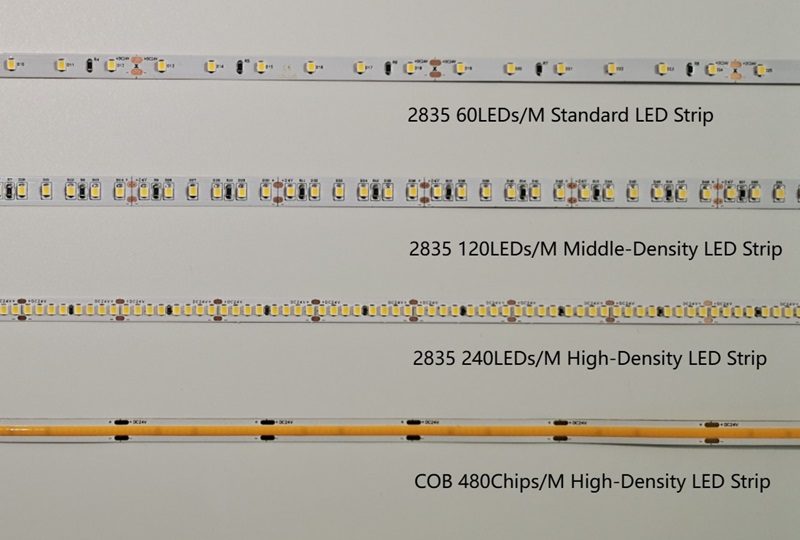
Another key part of brightness planning is LED density. Two LED sheets may have similar total lumen output, but the one with tighter LED spacing usually produces a smoother visual result.
This is especially important for:
Thin marble
Highly translucent stone
Projects with limited cavity depth
Large uninterrupted feature panels
If the LED pitch is too wide, the light can break into visible points. If the LED pitch is tighter, the output is distributed more evenly across the surface.
For this reason, backlit marble often performs best with high-density LED sheets rather than sparse lighting layouts with higher individual intensity.
A Practical Example
Consider a 20 mm translucent white marble panel. At this thickness, the stone may transmit enough light to create a beautiful effect, but not enough to hide a poorly designed lighting layout.
A reasonable design approach would be:
Choose a high-density LED sheet
Target approximately 5,000–6,500 lumens per square meter
Allow a cavity depth of around 50–80 mm
Add a diffuser film if the installation depth is limited
Mount the LED sheet on an aluminum backing for improved heat dissipation
If the same stone is installed with only a 10–15 mm gap behind it, the risk of visible diode pattern increases sharply. If the cavity is increased to 40–60 mm or more, the light has a much better chance to blend before reaching the marble.
When a Diffuser Layer Becomes Necessary
A diffuser is not always required, but it can be extremely helpful when:
1)The cavity depth is too shallow
2)The stone is thin and more likely to reveal hotspots
3)The LED pitch is not tight enough
4)The surface needs a softer, more uniform glow
A thin opal acrylic sheet or diffusion film between the LED sheet and the marble can reduce spotting and allow a shallower build-up. This is often a practical solution when design constraints limit the available depth.
Why Mock-Up Testing Is Essential
Backlit marble should never be finalized purely from theory. Even with careful calculations, natural stone remains unpredictable.
A simple sample light box can help answer the most important questions before fabrication:
1) Is the LED sheet bright enough?
2) Is it too bright?
3)Does the marble show hotspots?
4)Is the cavity depth sufficient?
5)Does the colour temperature suit the stone?
6)Is a diffuser needed?
This test stage is especially important for luxury hotels, retail spaces, feature walls, reception counters, and other high-visibility projects where mistakes are costly to correct.
Best Applications for Backlit Marble Using LED Sheets

When brightness and cavity depth are designed correctly, LED light sheets can be used successfully in a wide range of marble applications, including:
1)Reception desks
2)Hotel lobby feature walls
3)Bar fronts
4)Retail display backdrops
5)Bathroom vanity walls
6)SPA interiors
7)Branded architectural surfaces
In all of these cases, the visual goal is the same: smooth illumination, no visible LED pattern, and a glow that enhances the marble rather than overpowering it.
Why Use a High-Quality LED Sheet for Backlit Marble?
A high-quality LED sheet is essential for backlit marble because the lighting system directly affects the final visual result. Marble is a natural material with varying translucency, veining, and thickness, so it requires stable and uniform illumination to achieve a smooth and elegant glow. A low-quality LED sheet may cause visible hotspots, uneven brightness, flicker, or color inconsistency, which can greatly reduce the beauty of the stone.
High-quality LED sheets also offer better brightness efficiency, more reliable heat dissipation, and a longer service life. This is especially important for backlit marble applications, because these installations are often built into walls, counters, or decorative structures where maintenance and replacement can be difficult. In addition, premium LED sheets usually provide better dimming performance, safer electrical stability, and easier installation, helping ensure both aesthetic quality and long-term reliability.
Conclusion
A successful backlit marble project depends on matching the lighting to the stone. In general, thicker marble needs higher LED brightness, and it also requires more installation depth to achieve even light and reduce hotspots.
LED light sheets are a practical solution because they provide uniform illumination, easy installation, and flexible design options. When brightness, marble thickness, and cavity depth are planned correctly, backlit marble can create a clean, elegant, and high-end lighting effect.
Ultimate Guide to COB LED Strip for Beginners in 2026
Ultimate Guide to LED Light Sheet for Beginners
Related Article
Need an Instant Quote For Your Upcoming Projects?
Send us the details and we will get back to you within 12 hours.