
Pros and Cons of a 12V LED System
12V LED lighting systems have become increasingly popular across a wide range of applications, from vehicles and marine environments to outdoor landscapes and off-grid lighting setups. Unlike traditional line-voltage lighting systems (120/240V AC), 12V systems operate on low-voltage direct current (DC), offering a unique balance between safety, flexibility, and performance.
Because of their compatibility with battery-based systems and their relatively safe operating voltage, 12V LED solutions are often the preferred choice in mobile, portable, or human-contact environments. However, they also introduce certain technical challenges that should not be overlooked. Understanding both the advantages and limitations is essential before deciding if a 12V LED system is right for your needs.
Advantages of a 12V LED System
1. Strong Compatibility with Common Power Sources
One of the biggest advantages of 12V LED systems is their widespread compatibility with existing electrical platforms. Many everyday systems—such as cars, RVs, boats, and even some solar setups—operate natively at 12V DC. This allows LED lighting to be connected directly to the power source without the need for complex voltage conversion.
Even in standard indoor applications, 12V power supplies are widely available and affordable due to their common use in electronics like desktop computers. This makes 12V systems both accessible and cost-effective, especially for users who want a flexible and modular lighting solution.
2. Improved Electrical Safety
Safety is one of the most compelling reasons to choose a 12V system. Because of the lower voltage, the risk of severe electric shock is significantly reduced compared to line-voltage systems. In most cases, accidental contact or minor wiring mistakes are far less likely to result in dangerous outcomes.
This makes 12V LED lighting particularly suitable for environments such as:
Outdoor landscape lighting
Marine and water-related applications
DIY and hobbyist projects
However, it is important to note that low voltage does not eliminate all risks. While shock hazards are reduced, high current levels can still generate heat and potentially create fire risks if the system is poorly designed.
3. Greater Reliability and Serviceability
Another key advantage lies in system design. In a 12V setup, the power supply or transformer is typically installed separately from the LED fixtures. This separation helps reduce heat exposure to sensitive electronic components, improving overall system lifespan.
Additionally, maintenance is much more convenient. Instead of replacing an entire lighting fixture due to a minor internal failure (such as a capacitor issue), individual components in a 12V system can often be repaired or replaced independently. This modular approach not only extends product life but also lowers long-term maintenance costs.
4. Flexibility Across Diverse Applications
12V LED systems are widely used in specialized environments where portability and adaptability are important. Common applications include:
- Vehicles (cars, RVs, buses)
- Boats and marine systems
- Landscape and garden lighting
- Mining and exploration lighting
- Stage and accent lighting
Their ability to operate efficiently in confined or hard-to-reach areas makes them particularly valuable in custom or space-limited installations.
Disadvantages of a 12V LED System
1. Higher Current Requirements and Efficiency Loss
One of the most significant drawbacks of a 12V system is its reliance on higher current to deliver the same power output. For example, a 120-watt lighting load would require about 1 amp at 120V, but approximately 10 amps at 12V.
This increase in current introduces several challenges:
- Greater heat generation
- Increased energy loss
- Higher demand on wiring and connectors
If not properly managed, these factors can reduce system efficiency and even create safety hazards.
2. Need for Thicker Wiring and Careful Design
Because higher current flows through the system, proper wire sizing becomes critical. Thin or undersized wires can overheat, leading to insulation damage or even fire risks.
To ensure safe and efficient operation, a 12V system typically requires:
- Thicker wire gauges
- Shorter cable runs to minimize voltage drop
- Careful load distribution
These requirements make system design more important compared to standard line-voltage setups.
12V Voltage Drop & Wire Length Distance (3% Drop or 11.64V)
| Load Wire |
20W 0.83A |
30W 1.3A |
40W 1.7A |
50W 2.1A |
60W 2.5A |
70W 2.9A |
80W 3.3A |
90W 3.75A |
100W 4.2A |
150W 6.25A |
200W 8.33A |
300W 12.5A |
| 20AWG | 2.7m [9ft.] |
1.8m [6ft.] |
1.5m [5ft.] |
1.2m [4ft.] |
0.9m [3ft.] |
0.6m [2ft.] |
Don't Use | Don't Use | Don't Use | Don't Use | Don't Use | Don't Use |
| 18AWG | 5.2m [17ft.] |
3.4m [11ft.] |
2.4m [8ft.] |
1.8m [6ft.] |
1.5m [5ft.] |
1.2m [4ft.] |
1m [3.4ft.] |
0.9m [3ft.] |
0.8m [2.7ft.] |
0.5m [1.8ft.] |
0.4m [1.3ft.] |
Don't Use |
| 16AWG | 8.2m [27ft.] |
5.5m [18ft.] |
4m [13ft.] |
3.1m [10ft.] |
2.7m [9ft.] |
1.9m [6.2ft.] |
1.6m [5.4ft.] |
1.5m [4.8ft.] |
1.4m [4.5ft.] |
0.9m [2.9ft.] |
0.6m [2.1ft.] |
0.4m [1.4ft.] |
| 14AWG | 13.1m [43ft.] |
8.8m [29ft.] |
6.4m [21ft.] |
5.2m [17ft.] |
4.3m [14ft.] |
3m [9.8ft.] |
2.6m [8.5ft.] |
2.3m [7.7ft.] |
2.1m [7ft.] |
1.4m [4.6ft.] |
1m [3.4ft.] |
0.7m [2.3ft.] |
| 12AWG | 20.7m [68ft.] |
13.7m [45ft.] |
10.4m [34ft.] |
8.2m [27ft.] |
6.7m [22ft.] |
4.9m [16ft.] |
4.1m [13.5ft.] |
3.7m [12ft.] |
3.4m [11ft.] |
2.3m [7.4ft.] |
1.7m [5.5ft.] |
1.1m [3.6ft.] |
| 10AWG | 30.2m [99ft.] |
20.1m [66ft.] |
14.9m [49ft.] |
11.9m [39ft.] |
10.1m [33ft.] |
7.6m [25ft.] |
7.5m [24.5ft.] |
5.9m [19.5ft.] |
5.5m [18ft.] |
3.5m [11.6ft.] |
2.6m [8.6ft.] |
1.8m [6ft.] |
3. Additional Components and Installation Complexity
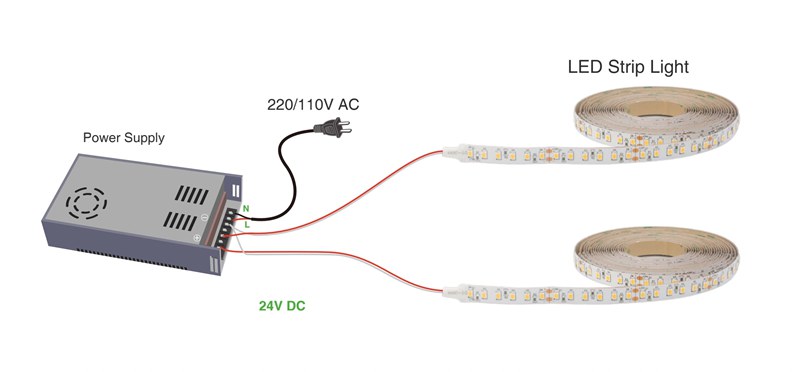
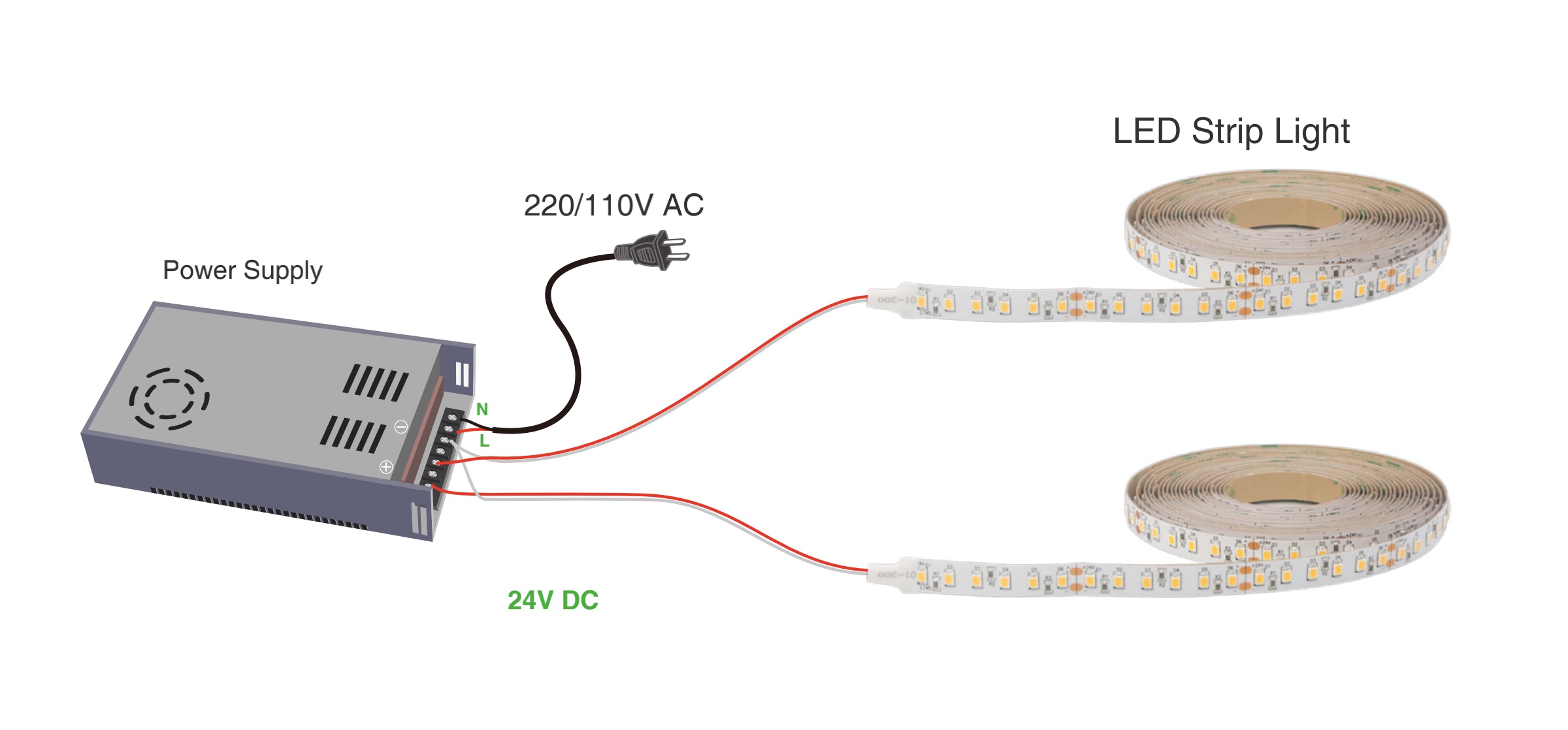
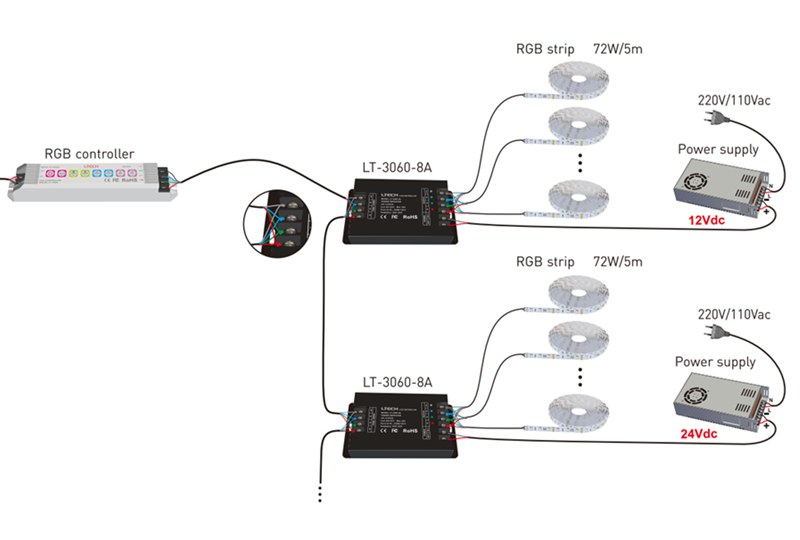
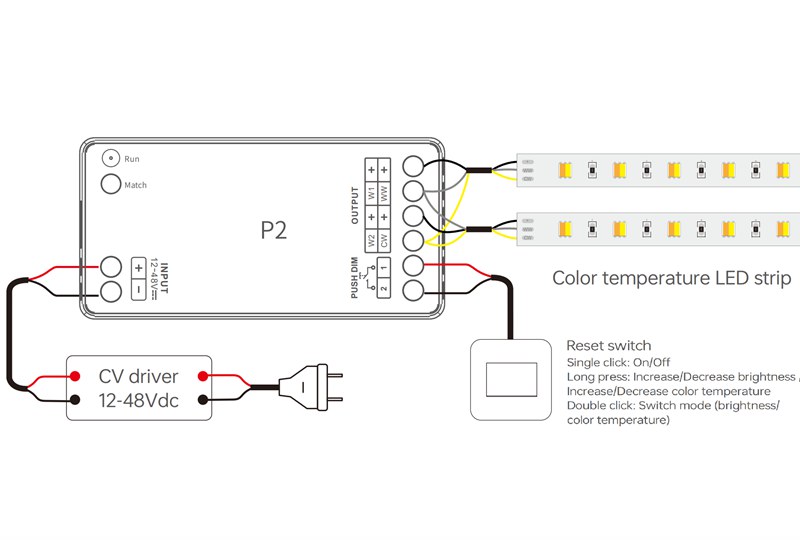
Unlike line-voltage lighting, which is often plug-and-play, 12V systems usually rely on external drivers or power supplies. This introduces:
- More components to purchase and install
- Additional wiring considerations
- Increased setup time
While this modularity provides flexibility, it may present a learning curve for beginners or those unfamiliar with low-voltage systems.
4. Limited Product Availability
Since most global infrastructure is built around line voltage, manufacturers tend to prioritize those products. As a result, 12V LED systems may offer:
Fewer design options
Limited advanced features in some categories
Reduced availability in certain markets
Although core lighting needs are well supported, highly specialized or decorative options may be easier to find in line-voltage formats.
Conclusion
A 12V LED system offers a compelling combination of safety, compatibility, and long-term reliability. It is particularly well-suited for mobile, outdoor, and off-grid applications where low-voltage operation provides clear advantages.
At the same time, its higher current requirements, need for careful system design, and relatively limited product selection mean it is not always the simplest or most efficient solution.
Ultimately, the choice between a 12V LED system and a line-voltage alternative depends on your specific priorities—whether you value safety and flexibility, or simplicity and maximum efficiency.
LM-80 vs LM-79 vs ISTMT vs TM-21 vs LM-82 in LED Test Reports
Top 10 LED Garden Light Manufacturers in China
Related Article
Need an Instant Quote For Your Upcoming Projects?
Send us the details and we will get back to you within 12 hours.