
Clear vs Frosted vs Milky vs Black Diffuser for LED Aluminum Profiles
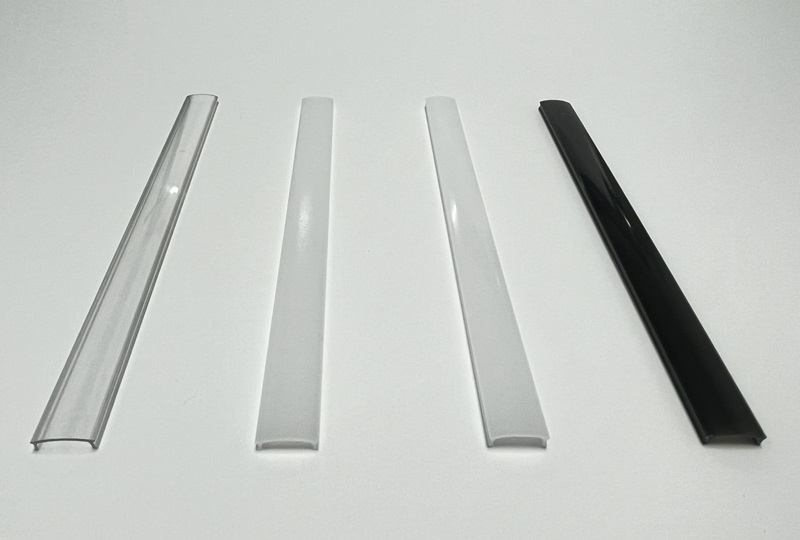
When choosing an LED aluminum profile for LED strip lights, many people focus on the size and shape of the profile first. However, the diffuser cover is also very important. The diffuser affects how the light looks, how bright the strip appears, whether you can see visible LED dots, and how well the profile matches the surrounding design.
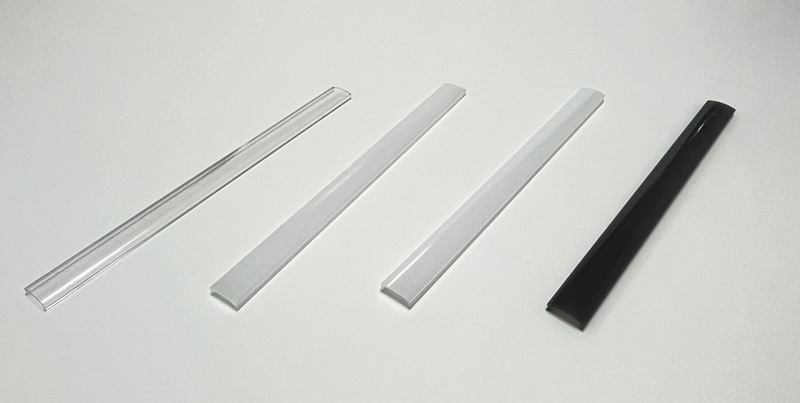
The four common diffuser options are clear diffuser, frosted diffuser, milky diffuser, and black diffuser. They may look similar in function, but the final lighting effect can be very different.
In this guide, we will explain the differences between clear, frosted, milky, and black diffusers, and help you choose the best one for your LED strip lighting project.
What Is a Diffuser for LED Aluminum Profiles?
A diffuser is the plastic cover placed on top of an LED aluminum profile. It is usually made of PC or PMMA material. Its main job is to cover the LED strip and soften the light.
A diffuser can help:
- Protect the LED strip from dust and touch
- Make the lighting look cleaner
- Reduce glare
- Hide visible LED dots
- Create a softer lighting effect
- Improve the final appearance of the installation
- Match different interior styles and profile colors
Without a diffuser, the LED strip is directly visible. This may be acceptable for hidden lighting, but for visible installations, a diffuser usually makes the result look much better.
Quick Comparison: Clear vs Frosted vs Milky vs Black Diffuser
| Diffuser Type | Brightness | Dotless Effect | Light Softness | Appearance When Off | Best For |
| Clear Diffuser | Highest | Low | Low | Transparent | Maximum brightness, hidden lighting |
| Frosted Diffuser | Medium-high | Medium | Medium | Semi-transparent | General indoor lighting |
| Milky Diffuser | Lower | Best | Best | White / opal | Dotless and soft lighting effects |
| Black Diffuser | Lower | Medium to good | Medium | Black / dark cover | Black profiles, modern interiors, hidden look |
In simple words:
Clear diffuser is the brightest. Frosted diffuser is the balanced choice. Milky diffuser gives the smoothest light. Black diffuser gives a cleaner dark appearance when the light is off.
1. Clear Diffuser

This type is suitable when brightness is more important than softness. However, because it does not diffuse the light very much, the LED dots are usually more visible.
Advantages of Clear Diffuser
The biggest advantage of a clear diffuser is high light output. Since it blocks very little light, the LED strip can keep most of its original brightness.
It is also useful when the LED aluminum profile is installed in a hidden place, such as inside a cabinet, behind a panel, or in an indirect lighting area. In these cases, the LED dots may not be directly visible, so the clear diffuser can work well.
Disadvantages of Clear Diffuser
The main disadvantage is that it does not hide LED dots well. If the aluminum profile is visible and the LED strip has low density, users may clearly see each LED point.
It can also create stronger glare compared with frosted, milky, or black diffusers.
Best Applications for Clear Diffuser
Clear diffusers are suitable for:
- Hidden LED strip lighting
- Indirect lighting
- Places where maximum brightness is needed
- Cabinet interior lighting
- Display lighting where brightness is more important
- Projects using very dense LED strips or COB LED strips
If you want the brightest possible effect and do not mind visible LED dots, a clear diffuser can be a good choice.
2. Frosted Diffuser
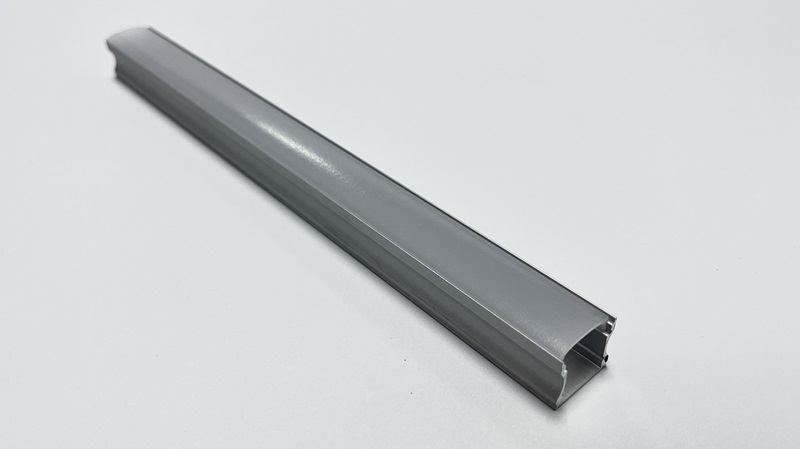
A frosted diffuser has a semi-transparent surface. It softens the light better than a clear diffuser, but it still allows a good amount of brightness to pass through.
This is often the most balanced option. It is not as bright as a clear diffuser, but it gives a cleaner and softer lighting effect.
Advantages of Frosted Diffuser
A frosted diffuser gives a good balance between brightness and diffusion. It can reduce glare and make the LED strip look more comfortable to the eyes.
It can also reduce visible LED dots to some degree, especially if the LED strip has a higher LED density or the aluminum profile is deeper.
For many standard LED strip projects, frosted diffuser is a practical and safe choice.
Disadvantages of Frosted Diffuser
Although a frosted diffuser can soften the light, it may not fully remove LED dots. If you use a low-density LED strip, such as 30 LEDs/m, dots may still be visible.
It also reduces brightness slightly compared with a clear diffuser.
Best Applications for Frosted Diffuser
Frosted diffusers are suitable for:
- Under-cabinet lighting
- Shelf lighting
- Wardrobe lighting
- General indoor decorative lighting
- Commercial display lighting
- Office or home linear lighting
If you want a balance between brightness and softness, frosted diffuser is usually a very good option.
3. Milky Diffuser
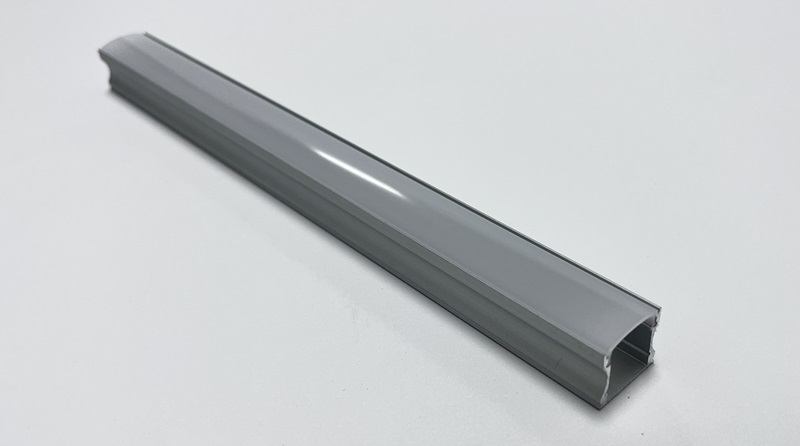
A milky diffuser, also called an opal diffuser, has a white or milky appearance. It diffuses the light much more strongly than clear or frosted diffusers.
This type is the best choice when you want a smooth, soft, and more dotless lighting effect.
Advantages of Milky Diffuser
The biggest advantage of a milky diffuser is better light uniformity. It can hide LED dots more effectively and create a continuous line of light.
This is especially useful when the LED aluminum profile is installed in a visible location, such as on a wall, ceiling, stair, display shelf, or furniture edge.
Milky diffusers also reduce glare and make the light more comfortable.
Disadvantages of Milky Diffuser
The main disadvantage is lower brightness. Because the diffuser blocks and scatters more light, the final light output is lower than clear and frosted options.
If your project needs high brightness, you may need to choose a higher-power LED strip or use a higher-density strip to balance the light loss.
Best Applications for Milky Diffuser
Milky diffusers are suitable for:
- Dotless linear lighting
- Visible LED aluminum profile installations
- Decorative wall lighting
- Ceiling line lighting
- Stair lighting
- Furniture lighting
- Hotel, retail, and commercial lighting projects
If the final appearance is more important than maximum brightness, a milky diffuser is usually the best choice.
4. Black Diffuser
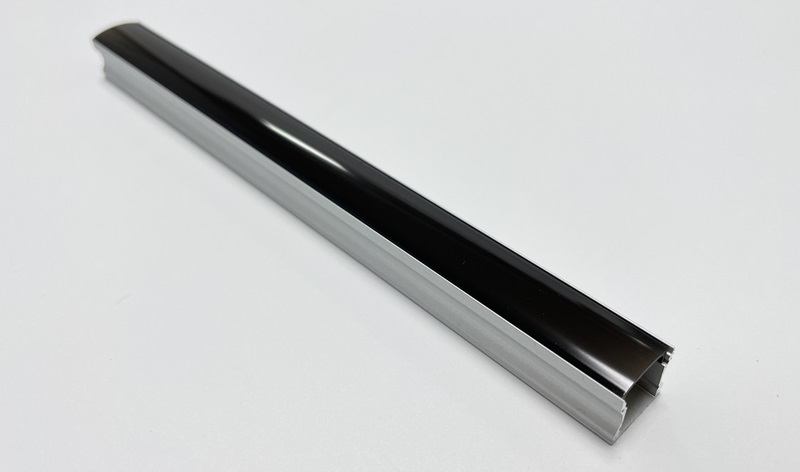
A black diffuser, also called a black PC cover, has a dark or smoked appearance. It is often used with black LED aluminum profiles or dark-colored interiors.
The main purpose of a black diffuser is not only to soften the light, but also to improve the appearance when the light is off. When installed in a black profile, a black diffuser can make the whole lighting channel look more hidden and integrated.
Advantages of Black Diffuser
The biggest advantage of a black diffuser is its clean appearance. When the LED strip is turned off, the black cover blends better with black aluminum profiles, dark ceilings, dark shelves, display cabinets, or modern interior designs.
It can also reduce direct visibility of the LED strip and make the installation look more refined. For retail displays, bars, hotels, gaming rooms, and architectural decoration, black diffusers can create a more stylish and premium look.
Disadvantages of Black Diffuser
The main disadvantage is lower brightness. Because the cover is darker, it blocks more light than clear or frosted covers. The final light output may be lower, so it is not the best option if maximum brightness is the main goal.
Also, the dotless effect depends on the LED strip density, profile depth, and diffuser material. A black diffuser can help hide the strip when off, but it may not always create the same smooth dotless effect as a milky diffuser when on.
Best Applications for Black Diffuser
Black diffusers are suitable for:
- Black LED aluminum profiles
- Dark interior design
- Retail display lighting
- Bar and hotel lighting
- Gaming room lighting
- Modern cabinet lighting
- Decorative linear lighting
- Projects where the profile should look hidden when off
If your project needs a darker, cleaner, and more stylish appearance, especially when the lights are off, a black diffuser is a good choice.
Which Diffuser Is Best for Dotless Lighting?
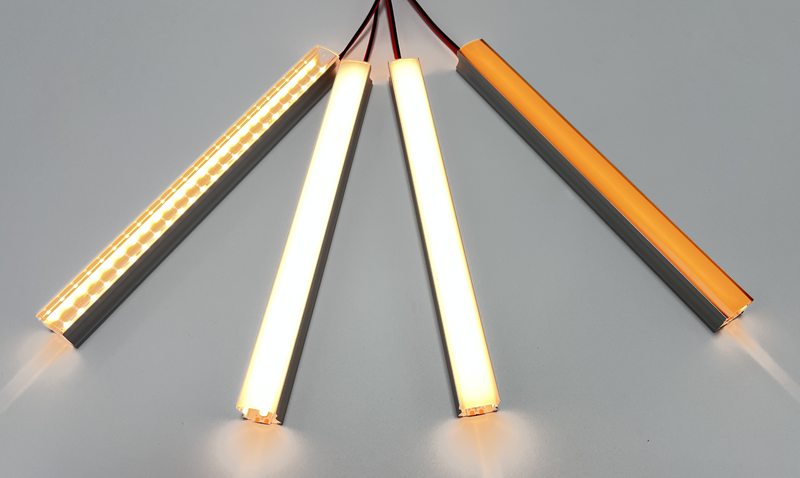
For dotless lighting, the best choice is usually a milky diffuser.
However, the diffuser is not the only factor. Dotless lighting also depends on:
- LED density
- Distance between LEDs and diffuser
- Depth of the aluminum profile
- Diffuser material
- LED strip type
- Viewing distance
For example, a low-density LED strip in a shallow aluminum profile may still show dots, even with a milky diffuser.
If you want a better dotless effect, you can use:
- COB LED strip
- High-density LED strip
- Deeper aluminum profile
- Milky diffuser
- Wider lighting surface
A black diffuser may also reduce visible LED dots in some designs, but if the main goal is the smoothest continuous light line, milky diffuser is usually the better choice.
Which Diffuser Is the Brightest?
The clear diffuser is the brightest option because it allows the most light to pass through.
The general brightness ranking is:
Clear diffuser > Frosted diffuser > Milky diffuser > Black diffuser
However, brightness is not the only thing to consider. A clear diffuser may be bright, but it may also show LED dots and glare. A milky diffuser may be less bright, but the light looks softer and more even. A black diffuser may reduce brightness more, but it gives a better hidden appearance when the light is off.
So, the best choice depends on what matters more in your project: brightness, softness, dotless effect, or appearance when off.
How to Choose the Right Diffuser
Here is a simple way to choose:
| Your Need | Recommended Diffuser |
| Maximum brightness | Clear diffuser |
| Balanced brightness and softness | Frosted diffuser |
| Smooth and dotless effect | Milky diffuser |
| Hidden look when light is off | Black diffuser |
| Hidden lighting | Clear or frosted diffuser |
| Visible linear lighting | Milky diffuser |
| Black aluminum profile | Black diffuser |
| Cabinet lighting | Frosted, milky, or black diffuser |
| Commercial display lighting | Clear, frosted, or black diffuser |
| Decorative ambient lighting | Milky or black diffuser |
| Modern dark interior design | Black diffuser |
For most home and commercial installations, frosted and milky diffusers are more popular because they create a cleaner and more comfortable light. For black profiles or dark design spaces, black diffusers are a better visual match.
Common Mistakes When Choosing a Diffuser
One common mistake is choosing a clear diffuser only because it is brighter. Brightness is important, but if the aluminum profile is visible, LED dots may make the installation look less professional.
Another mistake is expecting a milky diffuser to remove all LED dots in every situation. If the LED strip has low LED density or the profile is too shallow, dots may still appear.
Some users also forget that milky and black diffusers reduce brightness. If the project needs both soft lighting and high brightness, it may be necessary to use a stronger LED strip or a higher-density strip.
Another mistake is using a black diffuser only for its appearance without considering brightness loss. A black cover can look very clean when off, but the final brightness may be lower than expected.
Finally, do not choose the diffuser separately from the aluminum profile. The same diffuser may look different on different profile depths, widths, and LED strip types.
Conclusion
The diffuser is an important part of an LED aluminum profile. It affects brightness, softness, glare, dot visibility, and the appearance of the whole installation.
A clear diffuser is best when you need maximum brightness. A frosted diffuser is a balanced choice for many general lighting projects. A milky diffuser is best for smooth, soft, and more dotless lighting effects. A black diffuser is best when you want a darker, cleaner, and more integrated appearance, especially with black aluminum profiles.
There is no single best diffuser for every project. The right choice depends on your LED strip type, aluminum profile depth, brightness requirement, design style, and final lighting effect. For a clean and professional installation, always choose the LED strip, aluminum profile, and diffuser together.
320 vs 480 vs 528 Chips/m White COB LED Strip Comparison
The Complete Guide to Side-Emitting LED Strip Lights
Related Article


Need an Instant Quote For Your Upcoming Projects?
Send us the details and we will get back to you within 12 hours.