
COB LED Strip Passed 160hrs Thermal Shock Cycles Test
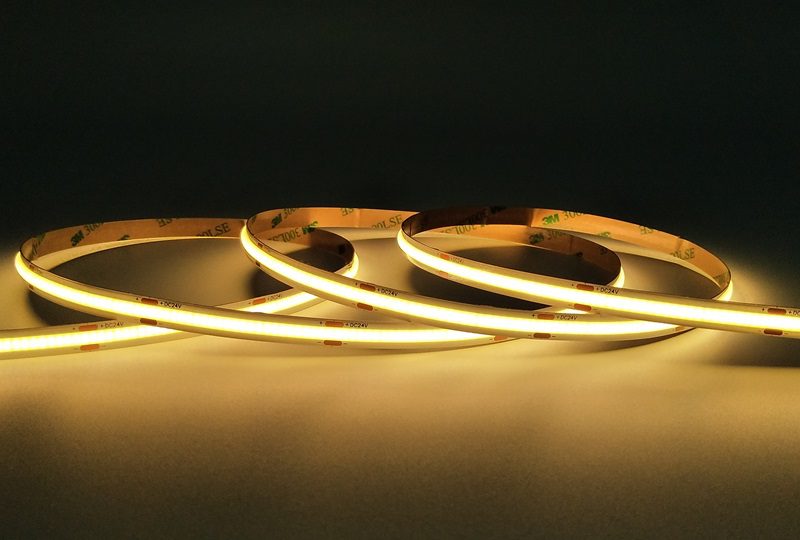
COB (Chip on Board) LED strips are known for their high light output, energy efficiency, and compact design, making them a popular choice for a variety of industrial and residential applications. However, to ensure their long-term reliability and performance, it is essential to subject them to rigorous testing under extreme environmental conditions. One of the most critical tests for COB LED strips is the thermal shock test, which evaluates the ability of the strips to withstand rapid temperature fluctuations, a common challenge in environments where temperatures can change drastically.
Why Thermal Shock Testing Matters for COB LED Strips
Thermal shock testing is essential for determining how well COB LED strips perform when exposed to sudden and extreme temperature variations. During this test, the LED strips are subjected to cycles of high and low temperatures, simulating the thermal stresses they would encounter in real-world conditions. This helps ensure that the materials and components within the strips remain intact and continue to function efficiently, even under harsh environmental conditions.
Test Equipment and Setup
Test Equipment
The thermal shock test was conducted using a cold and hot shock test chamber. This equipment is designed to expose products to rapid and extreme temperature fluctuations to simulate the stress they might experience in real-world conditions, especially in environments where temperatures can change drastically.
COB LED Strip Sample List
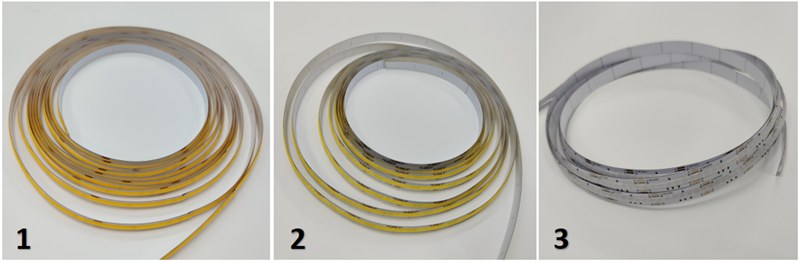
In this report, three different types of COB LED strips were tested:
1. COB 480LED/M DC24V 3000K 9.6W
2. COB 608LED/M DC24V 2700K+6000K 9.6W
Test Environment
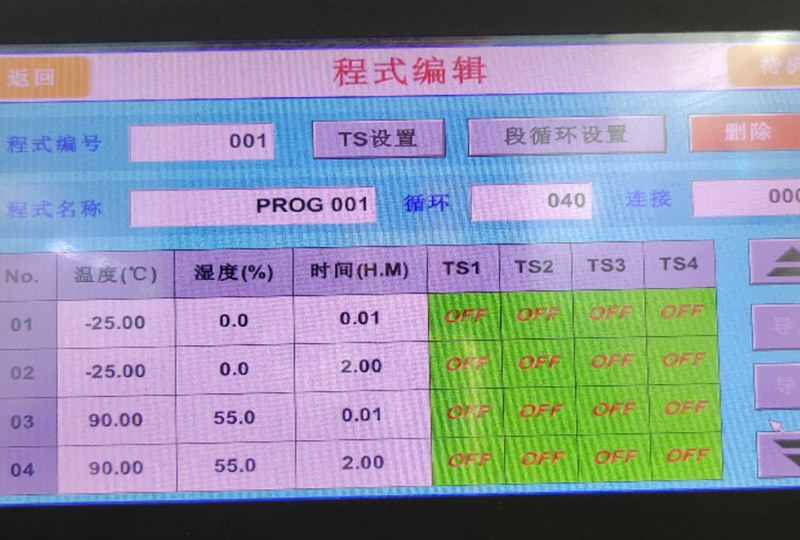
1. Low Temperature: -25°C for 2 hours
2. High Temperature: 90°C with 55% humidity for 2 hours
3. Cycle Count: 40 cycles (160 hours)
Test Process and Procedure
Sample Preparation
The test samples were numbered, and their initial photoelectric parameters (such as voltage, current, and luminous flux) were recorded.
Temperature Cycle Setup
The LED strips were placed into the temperature cycling chamber, ensuring they were not powered on during this preparation stage.
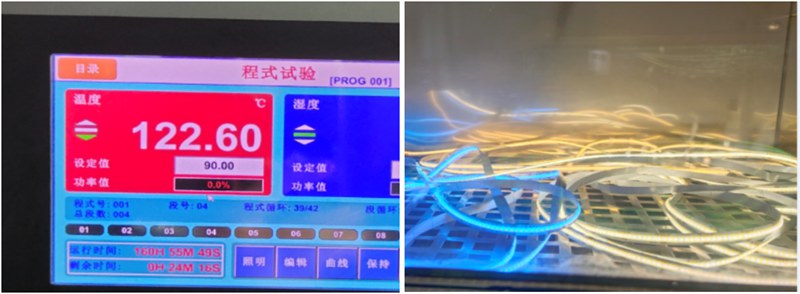
Temperature Cycle Testing
The test chamber was programmed to alternate between low and high temperatures.
Post-Test Evaluation
After completing the thermal shock cycles, the products were allowed to cool to room temperature. They were then carefully inspected for any visible damage, such as cracking, discoloration, or deformations.
Final Test
After the cooling phase, the photoelectric parameters were measured again to assess any changes in the light output, current, power, and luminous flux.
Quality Standards and Acceptance Criteria
The following criteria were applied to determine whether the COB LED strips passed the thermal shock test:
Visual Inspection:
The strips must show no signs of cracking, discoloration, deformation, dead spots, flickering, weak light, or other adverse phenomena.
Performance:
The change in luminous flux, current, and power parameters must not exceed ±10% compared to the initial test readings.
Test Results: Performance and Durability
The COB LED strips were carefully observed before, during, and after the test. Below are the data comparisons and test observations at different stages of the test:
Before the Test
| Item | Voltage (V) | Current (mA) | Power (W) | Luminous Flux (LM) |
| 1 | DC24 | 396 | 9.51 | 877.21 |
| 2 | DC24 | 938 | 22.51 | 2066.41 |
| 3 | DC24 | 641 | 15.38 | 699.79 |
After the Test
| Item | Voltage (V) | Current (mA) | Power (W) | Luminous Flux (LM) | Luminous Flux Maintenance Rate (%) |
| 1 | DC24 | 393 | 9.43 | 863.96 | 0.984 |
| 2 | DC24 | 933 | 22.32 | 2021.38 | 0.9782 |
| 3 | DC24 | 637 | 15.28 | 678.92 | 0.9702 |
As shown in the table above, the luminous flux maintenance rate for each of the three tested LED strips remained above 97% after the 40 thermal shock cycles, indicating excellent durability and minimal performance degradation.
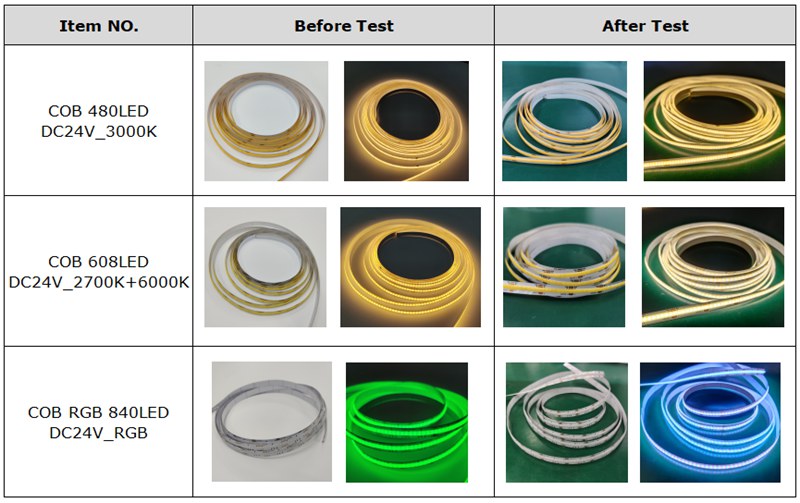
Visual and Lighting Observations
Final Product Inspection
Appearance Inspection
The samples passed the appearance inspection without showing any cracks, discoloration, deformation, bubbles, or stains. The LED strips retained their aesthetic integrity throughout the test.
Lighting Observation
During the test, the strips exhibited no signs of dead lights, flickering, weak light, or burned-out LEDs. No blackened wicks or other issues were observed after 52 hours, 111 hours, and 160 hours of continuous testing.
These observations confirm that the COB LED strips passed the visual inspection and lighting observation criteria, meeting the strict quality requirements set out for the test.
Why Choose COB LED Strips with Thermal Shock Resistance?
The ability of COB LED strips to perform under harsh temperature variations is essential for ensuring long-term reliability and reducing the need for maintenance or replacements. Whether you're lighting up a factory floor, a commercial space, or outdoor areas, you can trust COB LED strips to remain stable and efficient over time.
By passing the 40 thermal shock test cycles, these LED strips provide exceptional durability, which is a key consideration for industries that rely on consistent and long-lasting lighting solutions.
Conclusion
The results of the thermal shock test reinforce that COB LED strips offer an exceptional solution for lighting in extreme environments. Their durability, energy efficiency, and ability to withstand both high and low temperatures make them a top choice for a variety of applications. If you're looking for reliable lighting that can stand the test of time and temperature, consider COB LED strips.
FAQ
1. What makes COB LED strips different from traditional LED strips?
COB LED strips are known for their higher brightness, energy efficiency, and improved heat dissipation, offering a more durable and uniform lighting solution compared to traditional LED strips.
2. What factors affect the performance of COB LED strips?
Factors such as temperature, humidity, and power supply quality can affect the performance and lifespan of COB LED strips. Proper heat management and stable power supply are key to maximizing their lifespan and performance.
3. How are COB LED strips used in industrial applications?
COB LED strips are commonly used in industrial lighting for their durability, high brightness, and ability to withstand harsh conditions, such as factories, warehouses, and outdoor areas exposed to fluctuating temperatures.
4. Can COB LED strips handle moisture or humidity?
COB LED strips designed for outdoor or industrial use often come with waterproofing and humidity resistance features, but it’s important to ensure the strips are rated for such conditions (e.g., IP65 or higher) for optimal performance.
5. How do you install COB LED strips?
COB LED strips can be easily installed with adhesive backing, making them ideal for flexible applications. They can be cut to length, mounted in desired locations, and powered via a compatible driver or power supply.
6. Can COB LED strips be used outdoors?
Yes, COB LED strips are suitable for outdoor use, especially those rated with proper IP (Ingress Protection) ratings to resist moisture and dust. However, specific environmental tests like thermal shock are important for ensuring reliability in extreme weather conditions.
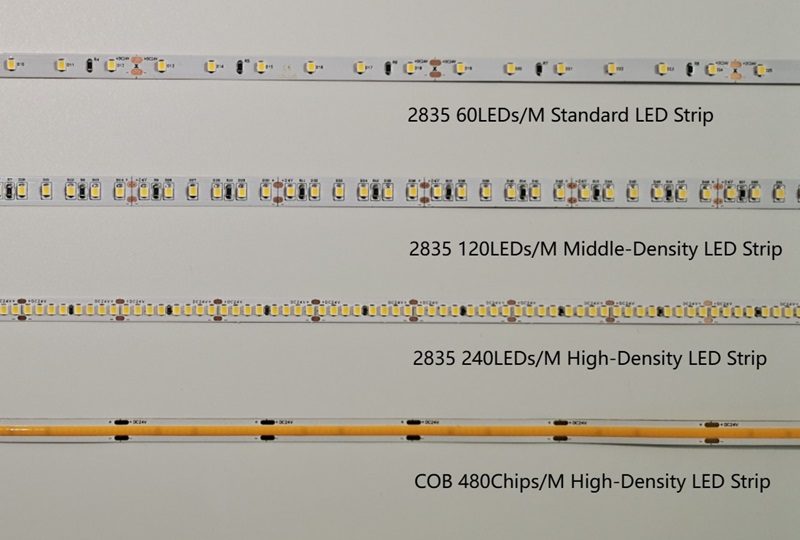
High-Density LED Strip vs Standard LED Strip Lights
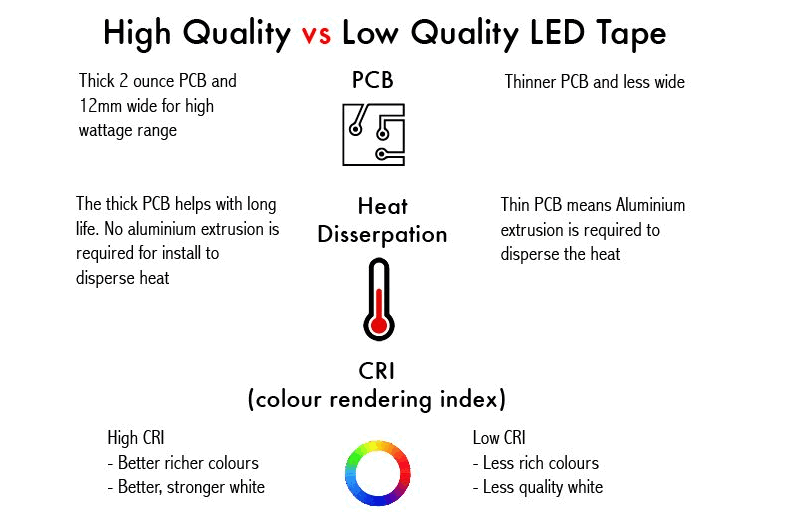
How to choose a suitable LED Strip Light in 2026?
Related Article
Need an Instant Quote For Your Upcoming Projects?
Send us the details and we will get back to you within 12 hours.