
Do LED Lights Attract Spiders?
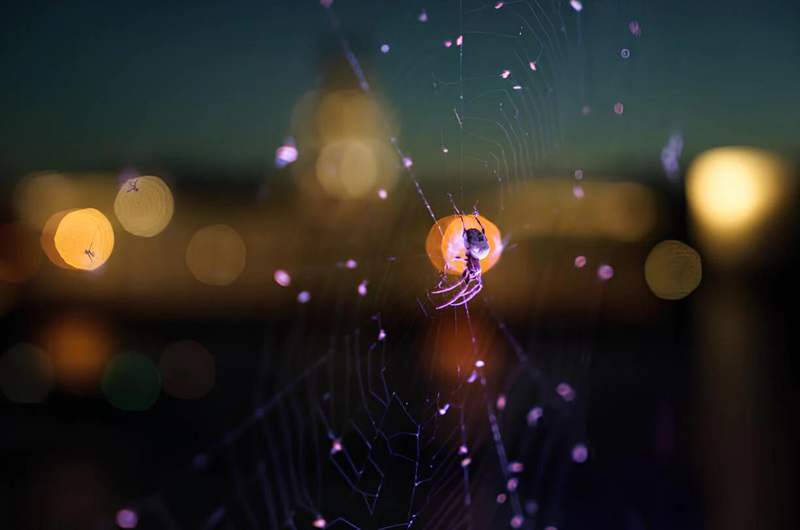
No. LED lights themselves do not attract spiders in the same way they might attract certain flying insects. Spiders are not drawn to light for the purpose of navigation or finding prey, as some insects are. Spiders are more likely to be found in areas where there is a stable food source, such as a population of insects that the spiders can feed on.
However, the presence of spiders around outdoor lights or lighted areas could be coincidental. Spiders may establish webs in locations where they find shelter, food, or other suitable conditions. If there is an abundance of flying insects attracted to the light, spiders may be indirectly drawn to these areas to capture and feed on the insects.
Where Are Spiders Most Likely to Hide Inside & Outside My Home?

Spiders exhibit diverse habitat preferences, with some being drawn to moisture-rich environments like basements and crawl spaces within homes. Conversely, other spiders favor drier settings, such as air vents, high upper corners of rooms, and attics. The majority of common house spiders are known to spend their entire lives indoors.
These arachnids tend to inhabit discreet and concealed spaces where they can access food and water. Areas with limited visibility or significant clutter create ideal hiding spots for spiders. Consequently, spiders are frequently discovered in storage spaces, garages, eaves, sheds, light fixtures, and even forested areas.
Why LEDs Seem to Attract Spiders?

However, there are a few reasons why it might seem like LED lights attract spiders:
Insects Attracted to Light
LED lights, especially those with a cooler color temperature, can attract flying insects. Spiders may be drawn to areas where there is an abundance of prey (insects attracted to the light), making it appear as though they are attracted to the light itself.
Web Visibility
The light emitted by LEDs can make spider webs more visible. Spiders may build webs in locations where they are more likely to catch insects, and if those insects are attracted to the light, the webs may be more noticeable around LED lights.
Heat Emission
Some sources suggest that certain types of lights, including LEDs, emit less heat compared to traditional bulbs. Spiders may be attracted to areas where the temperature is comfortable for them.
While LED lights are not a direct attractant for spiders, if the lights are attracting a significant number of insects, spiders may establish themselves in those areas to capture prey.
What Color LED Lights Attract Spiders The Most?

Research indicates that spiders are particularly drawn to LED lights that emit a blue light wavelength. This attraction is notable, especially with LED strip lights, as they are energy-efficient and maintain a cooler temperature compared to other lighting options. Unlike traditional incandescent bulbs, LED strip lights also lack UV radiation emission, making them more appealing to insects and subsequently attracting spiders.
The fascination of insects, including spiders, with light sources is rooted in their use of light for navigation during nighttime. However, insects tend to be less interested in warm colors that mimic the midday sun. Opting for warm hues like yellows, reds, and whites can result in fewer insects and spiders being attracted to your lighting.
Bright lights, in general, and the warmth emitted by light bulbs are common factors that draw bugs, contributing to increased insect and spider activity. While using yellow LED lights may not completely repel spiders, it can make your LED lighting setup less enticing to them, offering a potential solution to minimizing their presence in your space.
Why incandescent bulb attracting more spider compare to led light?
The attraction of spiders to incandescent bulbs compared to LED lights is influenced by various factors, primarily related to the spectrum of light emitted and the heat produced by each type of bulb.
|
|
Light Spectrum
|
Light Intensity | Attraction |
|
incandescent bulb
|
warm, yellowish light that includes a broad spectrum of visible and infrared light
|
a significant amount of heat as a byproduct of generating light
|
Insects, including spiders, are often attracted to the warmer tones as it mimics natural sunlight
|
|
led light
|
a specific spectrum of light
|
much lower temperatures
|
less attractive to insects, including spiders
|
Ways to Keep Spiders Away from LED Lights

However, there are some general principles that you can consider to minimize the attraction of spiders to certain light conditions:
Use Warm-Colored Lights
Spiders are less attracted to warm-colored lights with lower color temperatures, such as yellow or orange tones. These lights are generally less appealing to many flying insects as well.
Avoid Ultraviolet (UV) Light
While spiders are not specifically repelled by UV light, it's worth noting that many insects, including those that spiders prey on, are attracted to UV light. Avoiding UV-rich lights may help reduce the overall insect population and indirectly impact spider presence.
Use Dimmer Lights
Bright lights, regardless of color, tend to attract more insects, which can, in turn, attract spiders. Using dimmer lights may reduce the overall attractiveness to flying insects.
Final Words
Ultimately, LED lights do not necessarily attract more spiders than other types of lighting. However, LED strip lights are an attractive option for many homeowners due to their energy efficiency and long lifespan.
To avoid LED lights attracting spiders, make sure LED lights are pointed away from the ground and consider using LED dimmers or lower-wattage bulbs to reduce the amount of light emitted.
The ultimate guide to Dali Dimming
How to DIY LED Light Strips for Mirror?
Related Article

Need an Instant Quote For Your Upcoming Projects?
Send us the details and we will get back to you within 12 hours.