
The Complete Guide to Side-Emitting LED Strip Lights
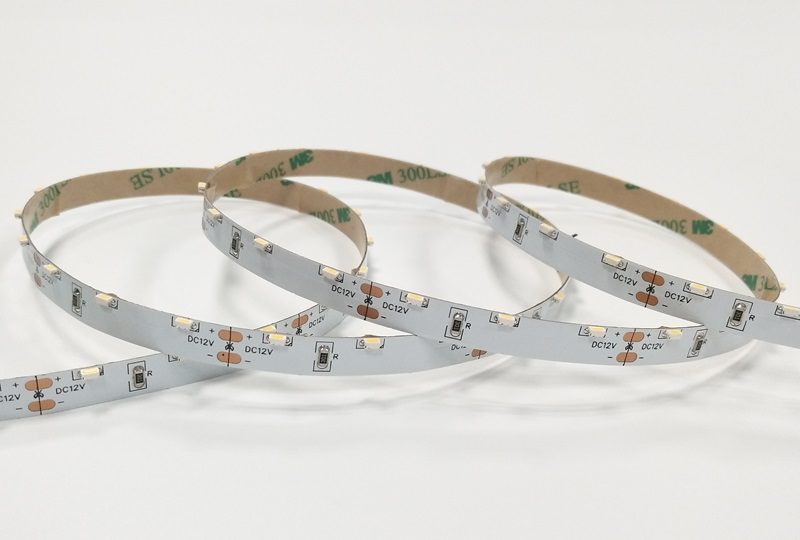
Side-emitting LED strip lights are designed to project light sideways rather than straight upward from the top of the strip. This different beam direction makes them especially useful for edge lighting, contour lighting, concealed lighting, and decorative lines where the light effect should be visible but the light source itself should remain hidden. Compared with standard top-emitting LED strips, side-emitting products are usually chosen more for visual effect, line definition, and architectural detailing than for direct task lighting.
What Are Side-Emitting LED Strip Lights?
A side-emitting LED strip is a flexible lighting product that sends light out from the side of the strip body instead of from the top surface. In practical use, this allows the strip to wash light along an edge, reveal a profile, or create a glowing outline without exposing the LED chips as directly as a standard strip often does. This lighting direction is especially helpful in narrow spaces, curved details, furniture edges, stairs, and decorative recesses where a normal front-facing strip may look too harsh or too exposed.
Types of Side-Emitting LED Strip Lights
Side-emitting LED strip lights are commonly discussed in three main series: SMD side-emitting LED strips, COB side-emitting LED strips, and side-bend neon flex. Strictly speaking, the first two belong more directly to the technical category of side-emitting LED strips, while the third is not always classified this way in the most precise engineering sense. However, because side-bend neon flex also produces a sideways lighting effect and is widely used for similar decorative purposes, many buyers and suppliers include it in the broader side-emitting lighting category.
1. SMD Side-Emitting LED Strip


SMD side-emitting LED strips are the most traditional and straightforward type. They use side-view SMD LED chips mounted on a flexible PCB so that the light is emitted horizontally rather than upward. This makes them the classic form of side-emitting strip lighting.
This series is often chosen for applications that require relatively strong brightness, a compact strip structure, and familiar installation methods. Compared with other side-emitting options, SMD side-emitting strips are usually more output-oriented and more cost-effective. However, because the LED points are still visible, they are generally better suited for installations where the strip itself is hidden from direct view.
2. COB Side-Emitting LED Strip


COB side-emitting LED strips are a newer and more refined series. Instead of using individually visible LED chips, they use chip-on-board technology with a much higher LED density, allowing the strip to produce a smoother and more continuous line of light.
This series is typically used in projects where visual uniformity matters more. Compared with traditional SMD side-emitting strips, COB side-emitting strips provide a cleaner appearance and greatly reduce visible light spots. They are therefore more suitable for applications where the strip may be closer to the eye, reflected on glossy surfaces, or intentionally left partially visible as part of the design.


Side-bend neon flex is also frequently discussed as part of the side-emitting lighting family, although this is not always the most precise technical classification. From a stricter product-structure perspective, neon flex is usually categorized by its silicone housing, diffused lighting effect, and bending direction, rather than only by the LED package inside.
Even so, in real market use, many customers still treat side-bend neon flex as a type of side-emitting lighting. The reason is simple: it creates a sideways glowing line and is often used for the same purposes as side-emitting LED strips, such as outline lighting, decorative borders, architectural accents, and signage. For this reason, it is practical to include side-bend neon flex in a broad discussion of side-emitting lighting products.
SMD vs COB vs Neon Side-Emitting LED Strip

When choosing a side-emitting lighting product, the three most commonly compared options are SMD side-emitting LED strips, COB side-emitting LED strips, and side-bend neon flex. Each has its own strengths and limitations, so the best choice depends on whether the project prioritizes brightness, uniformity, appearance, protection, or installation style.
Quick Comparison Table:
| Feature | SMD Side-Emitting LED Strip | COB Side-Emitting LED Strip | Neon Side-Emitting / Side-Bend Neon Flex |
| Brightness | Highest | Medium | Lowest |
| Light effect | Visible LED dots | Smooth and dot-free | Smooth and dot-free |
| Direct visibility | Not ideal for direct viewing | Better for visible installations | Best for visible installations |
| Batch-to-batch color consistency | Usually easiest to keep consistent | Often harder to match perfectly across batches | Usually between SMD and COB |
| Appearance | Most exposed-looking | Cleaner and more refined | Most finished and premium-looking |
| Structure | Slim flexible strip | Flexible strip with dense chip coating | Enclosed silicone housing |
| Protection level | Usually lower unless specially coated | Usually lower unless specially coated | Usually better protection |
| Installation style | Best when hidden from direct sight | Good for both hidden and semi-visible lighting | Best for visible outlines and decorative lighting |
| Typical applications | Hidden edge lighting, indirect accent lighting | Premium indoor contour lighting, visible linear lighting | Signage, architectural outlines, decorative borders |
If the project mainly needs higher brightness and lower cost, SMD side-emitting strip is usually the most practical option. If the goal is a smoother and more refined light line, COB is often the better choice. If the project prioritizes the best appearance, stronger protection, and a premium decorative effect, side-bend neon flex is usually the most suitable solution.
Side-Emitting LED Strip vs Standard LED Strip

The main difference between side-emitting LED strip lights and standard LED strip lights is the direction of light output. Standard LED strips emit light upward or outward from the top surface, while side-emitting LED strips send light horizontally from the side. Because of this, the two products are often used for different lighting purposes.
Quick Comparison Table:
| Feature | Side-Emitting LED Strip | Standard LED Strip |
| Light direction | Emits light from the side | Emits light from the top |
| Primary function | Creates edge glow, contour lighting, and hidden lighting effects | Provides direct illumination |
| Typical applications | Outlines, borders, architectural lines, and decorative details | Under-cabinet lighting, shelf lighting, task lighting, and general accent lighting |
| Lighting style | Softer and more indirect | More direct and functional |
| Visible effect | Usually more comfortable when visible, with fewer noticeable hot spots | More likely to show glare or visible hot spots without a diffuser |
In simple terms, standard LED strips are usually better for illumination, while side-emitting LED strips are usually better for creating shape, depth, and a refined lighting effect. That is why standard strips are commonly used where brightness and direct lighting matter more, while side-emitting products are often chosen for premium decorative lighting and architectural details.
Common Applications of Side-Emitting LED Strip Lights
Side-emitting LED strip lights are widely used in cabinet edges, shelves, display cases, furniture outlines, stair details, hallway lines, wall reveals, and ceiling recesses. In these settings, the strip is not mainly acting as a primary light source. Instead, it is used to create a clean illuminated edge, a floating effect, or a controlled architectural glow.
They are also widely used in signage and shaped decorative lighting. This is especially true for side-bend neon flex, which is often chosen for curved outlines, logos, channel-letter style effects, hospitality accents, and visible light lines that need a finished appearance. In those applications, the goal is not maximum brightness alone but also smoothness, flexibility, and visual impact.
How to Choose the Right Side-Emitting Product

The first step is to decide what matters most: brightness, uniformity, or appearance. If brightness is the priority and the strip will stay hidden from direct view, SMD side-emitting strips can be a strong choice. If you need a more uniform, dot-free line without jumping all the way to a neon-style product, side-emitting COB is often the balanced option. If visual finish, protection, and premium appearance matter most, side-bend neon flex is usually the best fit.
The second step is to think about visibility and installation distance. If the strip may be seen directly, SMD can look too pixelated unless it is deeply recessed or otherwise hidden. COB and neon are much more forgiving in visible installations because they reduce or eliminate noticeable light points. That is why many designers move toward COB or neon when the lighting line itself becomes part of the visual design.
The third step is to match the product to the environment. Bare strips and IP20 products are typically for dry indoor areas, while neon flex and other protected products are often preferred for projects that need better physical protection, easier cleaning, or outdoor resistance. Buyers should therefore choose not only by beam effect but also by installation conditions and protection requirements.
Installation Tips
As with any LED strip project, installation should begin with careful measurement, power planning, and attention to cut points. Long runs can suffer from voltage drop, and that problem matters even more in decorative applications because uneven brightness is easy to notice along a visible light line. Proper power supply sizing, realistic run lengths, and power injection where needed all help create a cleaner and more professional result.
For visible side-emitting installations, mounting method matters a lot. Adhesive alone may work for some indoor projects, but profiles, clips, or dedicated housings often improve alignment, durability, and final appearance. This is especially true for neon-style products and premium architectural details, where small installation defects can be obvious once the line is lit.
Accessories for Side-Emitting LED Strip Lights
Side-emitting LED strip lights usually require several types of accessories to complete a reliable and clean installation. The main accessory categories include mounting accessories, connectors, power and control accessories, and finishing accessories. For side-bend neon flex, there are also some specialized accessories designed for its structure.
1. Mounting Accessories
These accessories are used to fix the strip in place. Common options include adhesive backing, mounting clips, and aluminum profiles. They help keep the strip secure, straight, and neat after installation.
Connectors are used to join strips or connect wires more easily. Common types include strip-to-strip connectors, wire connectors, and corner connectors. They are useful when the installation involves extensions, turns, or separate sections.
This category includes LED power supplies and LED drivers. These accessories ensure the strip receives the correct voltage and stable power input for safe and proper operation.
This category includes dimmers and controllers. These accessories allow users to adjust brightness, color, or lighting effects according to different application needs.
5. Accessories for Side-Bend Neon Flex
Side-bend neon flex often uses more specialized accessories, such as mounting channels, brackets, input caps, and end caps. These parts help support the neon flex body and create a more professional finished look.
Final Thoughts
Side-emitting LED strip lights are not just a variation of standard LED strips; they solve a different visual problem. They are best when the project needs edge glow, contour lighting, concealed illumination, or a refined visible light line rather than direct front-facing brightness. In practical buying terms, SMD side-emitting strips usually suit output-focused projects, COB side-emitting strips suit smoother and more premium-looking lines, and side-bend neon flex suits the most finished and architectural-looking applications.
Clear vs Frosted vs Milky vs Black Diffuser for LED Aluminum Profiles
How to cut connect and install LED Sheet Lights
Related Article
Need an Instant Quote For Your Upcoming Projects?
Send us the details and we will get back to you within 12 hours.