
COB LED Strip for Architectural Lighting: How to Choose the Right Strip for Professional Projects
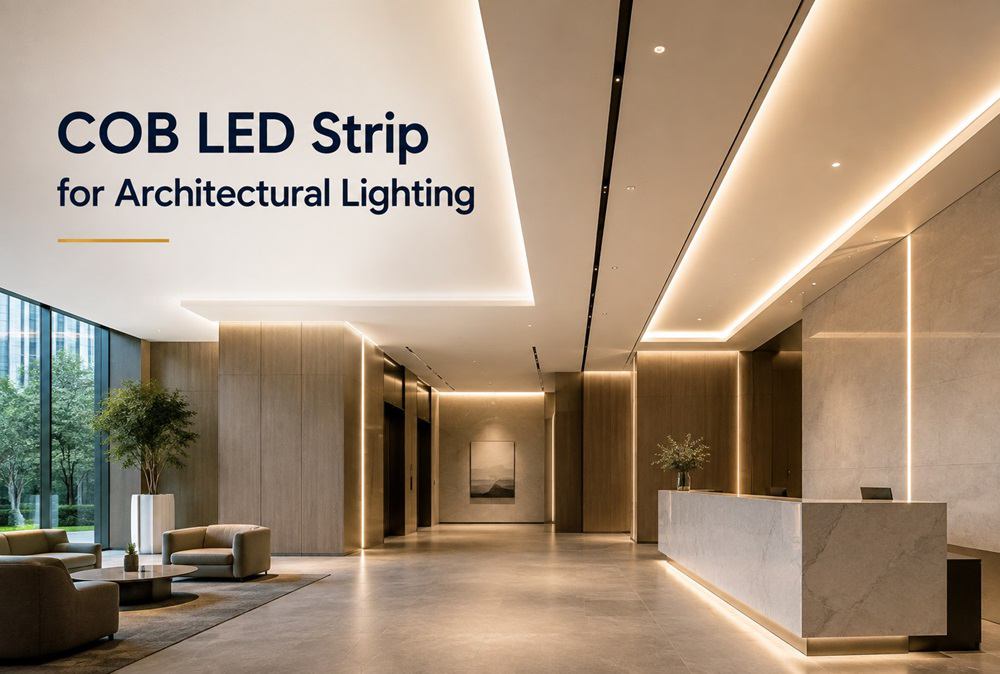
Architectural lighting is not simply about making a space brighter. In modern buildings, lighting has become an important part of the overall design, helping define atmosphere, highlight architectural features and improve user experience.
For professional projects such as hotels, offices, commercial buildings and luxury residences, lighting needs to achieve several important goals:
- Visual comfort
- Light uniformity
- Integration with architecture
- Long-term reliability
In applications such as hidden ceiling lighting, linear fixtures, wall washing and indirect lighting, the light source itself should almost disappear. What people experience is not the LED strip, but the quality and atmosphere created by the light.
This is why COB LED Strip has become increasingly popular in architectural lighting projects. With high LED density and seamless illumination, COB technology helps designers create smooth, continuous lighting effects while maintaining a clean architectural appearance.
1. Why COB LED Strip Is Suitable for Architectural Lighting
Architectural lighting requires higher visual quality compared with ordinary decorative lighting.
A professional lighting solution should not only provide sufficient brightness, but also deliver:
- Smooth illumination
- Consistent light output
- Comfortable viewing experience
- Reliable long-term operation
One of the biggest challenges in linear and hidden lighting applications is visible LED dots.
When traditional LED strips are installed in shallow profiles or directly visible areas, individual LED points may affect the overall appearance.
COB LED Strip uses a high-density LED arrangement to create a continuous lighting surface, making it suitable for applications where a smooth and uninterrupted light effect is required.
Typical applications include:
- Cove lighting
- Linear lighting fixtures
- Decorative architectural details
- Indirect lighting systems
COB LED Strip can be integrated into:
- Ceilings
- Walls
- Furniture
- Aluminum profiles
- Custom lighting fixtures
This allows architects and lighting designers to focus on the lighting effect rather than the visible hardware.
2. Choosing COB LED Strip Based on Architectural Applications
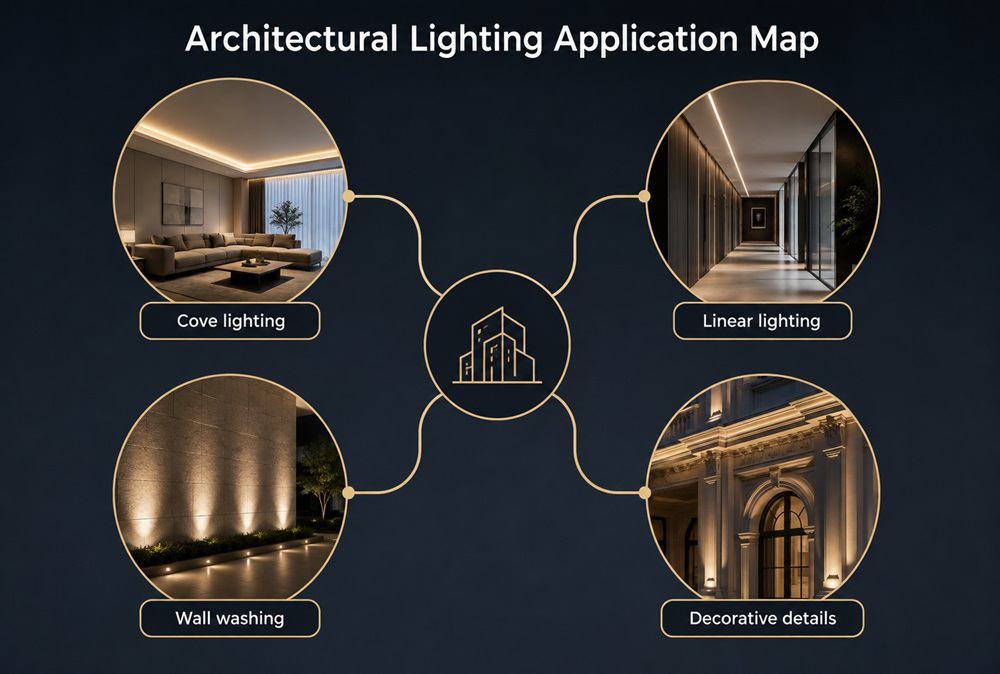
Different architectural applications have different lighting goals. The right COB LED Strip should be selected according to the way light interacts with the space.
Cove Lighting: Creating Soft and Invisible Ambient Light
Cove lighting is one of the most common applications in architectural interiors.
By hiding the light source inside ceilings or architectural structures, indirect lighting creates a soft and comfortable atmosphere.
Typical applications:
- Hotels
- Residential interiors
- Office spaces
- Lobby areas
For cove lighting, the goal is usually not maximum brightness.
The key requirements are:
- Smooth light transition
- No visible LED dots
- Comfortable color appearance
Recommended solution:
It provides clean and uniform illumination for general architectural lighting.
For projects requiring different lighting moods, CCT Adjustable COB LED Strip is a better choice because it allows designers to adjust the color temperature according to different environments.
Examples:
- Warm white for relaxing spaces
- Neutral white for working areas
- Cooler white for brighter functional environments
Linear Lighting Fixtures: Combining Design and Performance
Linear lighting has become an important element in modern architectural design.
Applications include:
- Pendant linear lighting
- Recessed linear fixtures
- Office lighting systems
- Commercial lighting installations
For professional linear fixtures, the LED strip needs to satisfy more than appearance requirements.
Important factors include:
- Narrow fixture design
- Continuous illumination
- High lumen output
- Stable long-term performance
Recommended solution:
High Power High Efficacy COB LED Strip + Aluminum Profile
This solution is suitable for applications requiring:
- High brightness output
- Better energy efficiency
- Long operating hours
- Professional lighting performance
Compared with decorative lighting, office and commercial linear lighting usually operates for many hours every day. Therefore, efficiency and thermal management become critical factors.
Wall Washing and Grazing Lighting: Highlighting Architectural Materials
Architectural lighting is often used to reveal the beauty of materials rather than simply illuminate a room.
Wall washing and grazing lighting are commonly used for:
- Stone walls
- Textured surfaces
- Artwork
- Architectural details
These applications require:
- High uniformity
- Stable brightness
- Good color rendering
Recommended solution:
High Brightness COB LED Strip
For applications where accurate color presentation is important, such as museums, galleries and premium retail spaces, High CRI COB LED Strip is recommended.
The purpose is to make materials, colors and textures appear more natural and visually accurate.
Decorative Architectural Details: Lighting in Limited Spaces
Many architectural projects include areas where installation space is extremely limited.
Examples:
- Stair lighting
- Handrail lighting
- Shelf lighting
- Furniture integration
- Decorative profiles
In these applications, traditional LED strips may not fit the available structure.
Recommended solutions:
Suitable for:
- Narrow installation spaces
- Hidden lighting structures
- Furniture applications
Suitable for:
- Edge lighting
- Special profiles
- Directional lighting designs
These special COB LED Strip solutions provide more flexibility for creative architectural applications.
3. Selecting COB LED Strip Based on Lighting Requirements

Instead of selecting an LED strip only by wattage, professional projects should first define the desired lighting effect.
Requirement 1: I Need Invisible Lighting
When the goal is to create light without showing the light source:
Recommended:
COB LED Strip + Aluminum Profile
Benefits:
- Dot-free illumination
- Smooth lighting surface
- Better architectural integration
Common applications:
- Cove lighting
- Ceiling indirect lighting
- Decorative lighting details
Requirement 2: I Need High Brightness From a Narrow Fixture
Some projects require strong illumination while keeping the fixture slim.
Examples:
- Office linear lighting
- Commercial fixtures
- Large indirect lighting
Recommended:
High Power High Efficacy COB LED Strip
Advantages:
- Higher output per meter
- Better efficiency
- Suitable for professional lighting systems
Requirement 3: I Need Adjustable Lighting Atmosphere
Modern architectural projects increasingly require flexible lighting scenes.
Recommended:
Applications:
- Hotels
- Smart buildings
- Hospitality spaces
- Entertainment projects
These solutions allow designers to create different lighting environments according to time, activity and user requirements.
4. Why Thermal Management Matters in Architectural Lighting
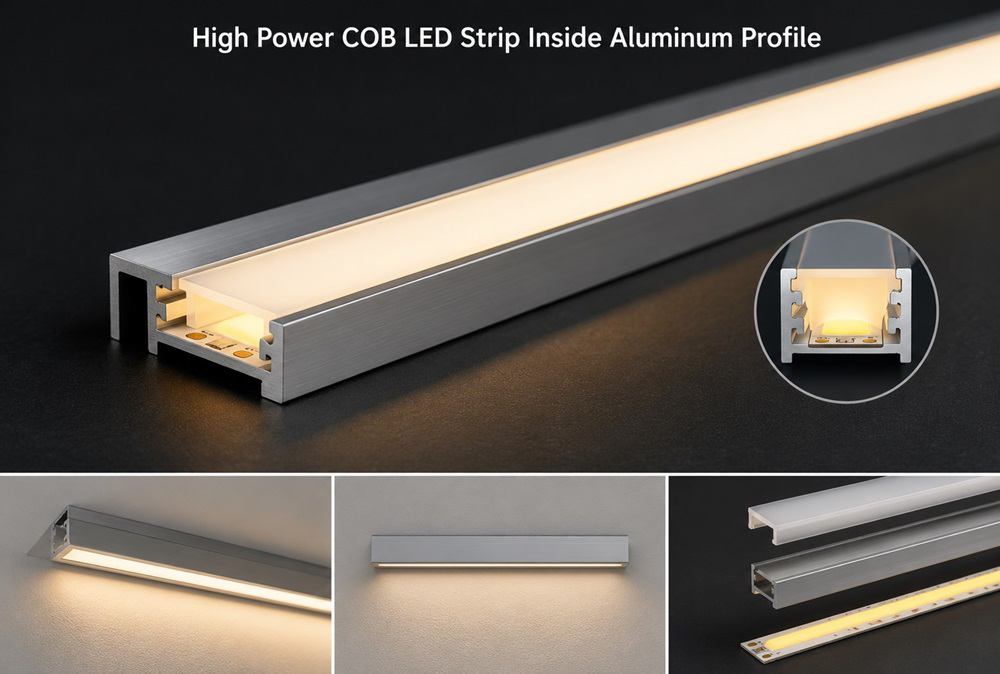
Thermal management is one of the most important factors in professional architectural lighting projects.
Unlike decorative lighting, architectural lighting systems are often designed for long operating periods. Many projects require the lighting system to operate:
- 8–12 hours per day
- Continuously throughout the year
- Inside enclosed structures or fixtures
For high-output COB LED Strip applications, heat generation becomes an important consideration.
Higher power means:
- More electrical energy converted into light
- More heat generated during operation
- Greater requirements for heat dissipation
Without proper thermal management, excessive temperature may affect:
- LED lifetime
- Brightness stability
- Color consistency
- Long-term reliability
Therefore:
Aluminum profile is not an accessory. It is part of the lighting system.
For professional architectural projects, thermal management should be considered during the fixture design stage, not after installation.
Why Aluminum Profile Is Important for COB LED Strip
An aluminum profile provides several important functions in architectural lighting systems.
Improve Heat Dissipation
The aluminum body helps transfer heat away from the COB LED Strip and maintain a more stable operating temperature.
This is especially important for:
Good thermal management helps maintain:
In architectural projects, aluminum profiles are not only used for cooling.
They also help create a complete lighting fixture with:
- Clean appearance
- Better protection
- Improved light diffusion
- Easier integration into ceilings, walls and furniture
For high-power COB LED Strip installations, the LED strip should be installed inside the aluminum profile, with proper contact between the PCB and aluminum surface.
This provides better thermal transfer and ensures more reliable long-term operation.
5. Recommended COB LED Strip Solutions for Different Projects
Different architectural projects have different lighting goals. The best COB LED Strip solution should match the environment, design purpose and performance requirements.
Office Building: High Efficiency and Professional Linear Lighting
Modern offices increasingly use linear lighting systems to create clean and comfortable working environments.
Typical applications:
- Pendant linear lights
- Recessed ceiling lighting
- Conference room lighting
- Workspace illumination
Main requirements:
- Comfortable brightness
- High efficiency
- Long operating hours
- Stable performance
Recommended solution:
High Power High Efficacy COB LED Strip + Aluminum Profile
This combination provides:
- High lumen output
- Better energy efficiency
- Professional appearance
- Reliable thermal performance
For office environments, 4000K neutral white is commonly selected because it provides a balance between visual comfort and working efficiency.
Luxury Hotel: Creating Atmosphere Through Lighting
Hotels require lighting that supports both functionality and user experience.
Lighting should create:
- Comfortable atmosphere
- Different lighting scenes
- Premium visual experience
Typical applications:
- Lobby lighting
- Guest rooms
- Corridors
- Restaurant areas
Recommended solutions:
CCT COB LED Strip
and
High CRI COB LED Strip
CCT lighting allows designers to adjust the atmosphere according to different scenarios.
For example:
- Warm white for relaxing spaces
- Neutral white for functional areas
- Different scenes for different times of the day
- High CRI COB LED Strip helps improve color accuracy, making interior materials, furniture and decorative elements appear more natural.
Retail Store: Highlighting Products and Visual Details
Retail lighting is designed not only to illuminate the store but also to attract attention and enhance product presentation.
Typical applications:
- Display shelves
- Product showcases
- Commercial interiors
Main requirements:
- High brightness
- Good color rendering
- Uniform illumination
Recommended solution:
High Brightness COB LED Strip
For premium retail environments, High CRI options are recommended because accurate color presentation is important for products such as:
- Fashion
- Jewelry
- Cosmetics
- Artwork
Museum and Gallery: Accurate Color Presentation
Museums and galleries have very strict lighting requirements.
The purpose of lighting is to present objects accurately while maintaining a comfortable viewing experience.
Key requirements:
- High color accuracy
- Stable illumination
- Comfortable brightness
Recommended solution:
High CRI COB LED Strip
Compared with simply increasing brightness, museums focus more on:
- Natural color reproduction
- Visual comfort
- Consistent lighting quality
Entertainment Venue: Dynamic and Creative Lighting Effects
Entertainment spaces often require lighting systems that can create different moods and visual effects.
Typical applications:
- Bars
- Clubs
- Event spaces
- Creative installations
Main requirements:
- Color control
- Dynamic effects
- Programmable lighting scenes
Recommended solutions:
- RGB COB LED Strip
- RGBW COB LED Strip
- RGB+CCT COB LED Strip
- Pixel COB LED Strip
These solutions allow designers to create:
- Color-changing effects
- Dynamic animations
- Interactive lighting scenes
Conclusion: Choosing COB LED Strip for Architectural Lighting
Architectural lighting is not simply about selecting the brightest LED Strip.
A professional lighting solution should consider:
Lighting purpose
Visual comfort
Installation environment
Brightness requirements
Thermal management
COB LED Strip provides flexible solutions for different architectural applications:
- White COB and CCT COB LED Strip for comfortable ambient lighting
- High Power High Efficacy COB LED Strip for professional linear lighting
- High Brightness and High CRI COB LED Strip for commercial and premium projects
- RGB, RGBW and Pixel COB LED Strip for creative lighting effects
For professional architectural projects, the best lighting solution is not always the highest output product. It is the solution that creates the right visual experience while maintaining stable performance over years of operation.
By combining the right COB LED Strip with proper installation and thermal management, lighting can become an integrated part of architecture rather than simply a source of illumination.
COB LED Strip vs Neon Flex: Which Linear Lighting Solution Is Better for Professional Projects?
COB LED Strip Color Options Explained: White, CCT, RGB, RGBW and RGB+CCT Solutions
Related Article
Need an Instant Quote For Your Upcoming Projects?
Send us the details and we will get back to you within 12 hours.