
How Long Can LED Strips Be Powered from One End?
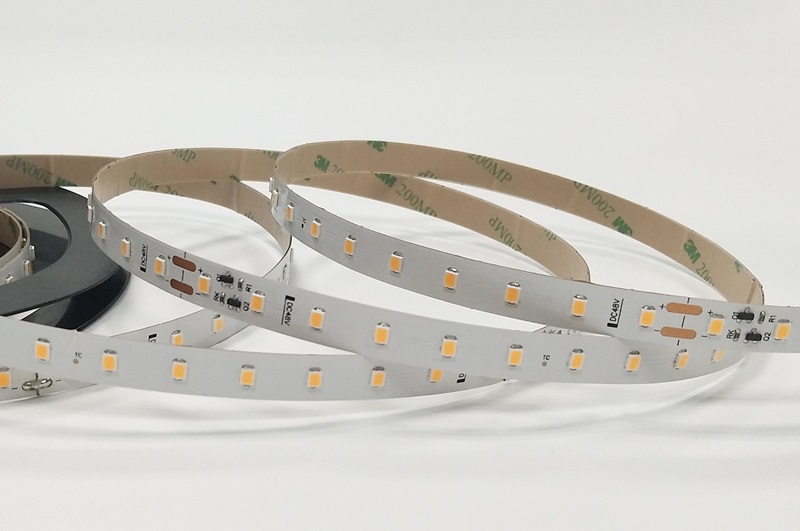
LED strip lights are versatile and widely used for various lighting applications. However, when planning longer installations, it is crucial to understand how far a strip can be powered from one end without experiencing issues like voltage drop. The maximum length that an LED strip can be powered from one end depends on factors such as voltage, power consumption, and wiring setup.
Generally, 12V LED strips can run up to 5 meters, while 24V LED strips can extend up to 10 meters. For longer runs, 48V LED strips can power up to 50 meters. High-voltage strips (like 110V or 240V AC strips) can reach 100 meters or more, making them ideal for large commercial or outdoor installations. Let’s explore how voltage affects LED strip length and how you can increase the running length of your LED strips.
Understanding Maximum Run Length and Voltage Drop
The maximum run length refers to the longest distance an LED strip can be powered from one end without experiencing voltage drop. Voltage drop occurs when electricity travels through the strip and encounters resistance, causing a loss of voltage. This results in the LEDs at the far end dimming or flickering. The lower the voltage, the more susceptible the strip is to voltage drop, particularly in 12V strips. Higher voltage strips like 24V and 48V allow for longer runs because they require less current, which reduces resistance.
How Does Voltage Relate to LED Strip Length?

Voltage directly affects the length of LED strips that can be powered from one end. Higher voltage strips allow for longer runs because they reduce the current required to power the strip. As current decreases, resistance in the wiring and strip decreases, which helps minimize voltage drop.
| LED Strip Voltage | Maximum Run Length | Description |
| 12V LED Strips | Up to 5 meters | These strips run on lower voltage, requiring higher current. Voltage drop becomes an issue after 5 meters, making them best suited for shorter runs or applications requiring less power. |
| 24V LED Strips | CV: Up to 10 meters CC: Up to 25 meters |
Doubling the voltage from 12V to 24V halves the current, reducing resistance and making voltage drop less noticeable, allowing for longer runs of up to 10 meters from one power source. If it's a constant current LED strip, the maximum length can reach up to 25 meters. |
| 48V LED Strips | Up to 50 meters | Higher voltage significantly reduces current, allowing these strips to extend up to 50 meters without experiencing voltage drop, making them ideal for long-distance installations. |
| High-Voltage LED Strips (110V, 240V AC) | Up to 100 meters | These strips operate directly from the mains power, avoiding most voltage drop issues and allowing for runs up to 100 meters, making them suitable for large commercial or outdoor installations. |
This table summarizes the maximum run lengths and descriptions for different LED strip voltages.
How Does Power Relate to LED Strip Length?
Power is a crucial factor in determining the maximum run length of an LED strip. The total power requirement of an LED strip installation depends on the strip’s wattage per meter and the length of the strip.
Wattage per meter refers to the amount of energy the strip consumes over a meter, and common wattage ratings for LED strips range from 4.8W/m to 14.4W/m. The higher the wattage, the more power the strip requires, which impacts the maximum length you can run before encountering voltage drop.
For example, a 10-meter LED strip rated at 4.8W/m will consume 48W of power (4.8W x 10m = 48W). If you increase the length to 20 meters, the total power requirement rises to 96W.
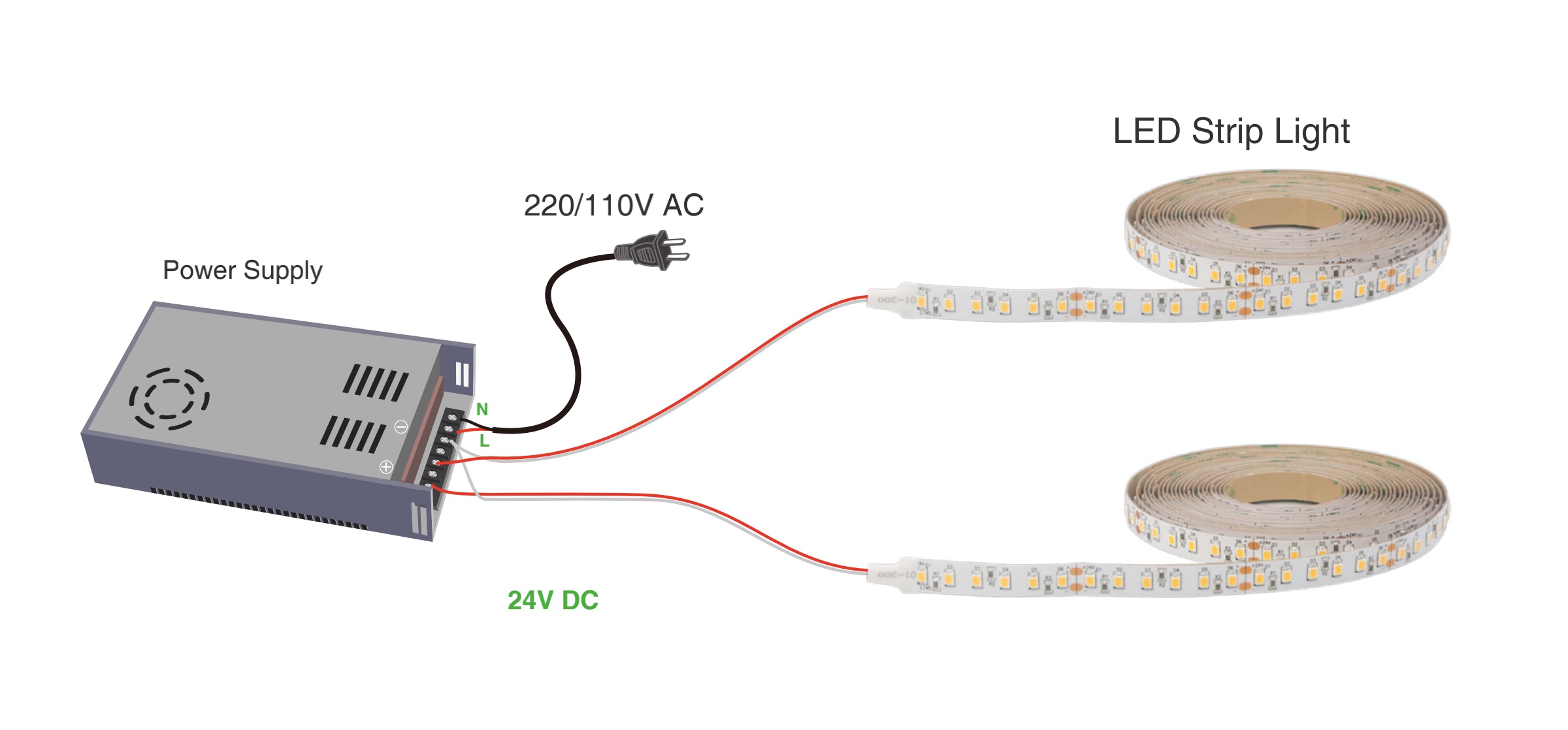
Choosing the correct power supply is also important. The power supply must provide enough wattage to handle the total length of the strip. It’s generally recommended to choose a power supply with 20-30% more capacity than the total power requirement to avoid overloading and ensure consistent operation.
What is Constant Current LED Strip?

Constant current LED strips are designed to maintain a consistent current throughout the entire strip, ensuring that the brightness remains even across the entire length of the strip. In traditional constant voltage strips, the power supply maintains a consistent voltage (e.g., 12V or 24V), but the current can fluctuate, which can lead to voltage drop and dimming over longer runs.
Constant current LED strips use drivers that regulate the amount of current flowing through the LEDs. This eliminates the risk of voltage drop, ensuring that the LEDs receive the exact amount of power they need, regardless of the length of the strip.
Why Constant Current LED Strips Can Make LED Strips Longer?
Constant current LED strips allow for longer runs compared to traditional constant voltage strips because they regulate the current flowing through the entire length of the strip. This reduces or eliminates the effects of voltage drop, allowing the LEDs to maintain consistent brightness even over long distances.
Here’s why constant current strips can power longer runs:
Current Regulation
The constant current driver ensures that each LED receives the same amount of current, no matter how far it is from the power source. This prevents dimming at the far end of the strip, which is common in constant voltage strips.
Reduced Voltage Drop
Since the current is regulated, the voltage drop that typically occurs as the electricity travels through the strip is minimized. This allows for much longer strips to be powered from a single power source.
Longer Maximum Run Length
With constant current strips, you can achieve run lengths of 30 to 50 meters or more without needing to add additional power supplies or experiencing uneven brightness. This makes them ideal for large installations where you want long, uninterrupted lines of light.
What is Ultra Length LED Strip?

Ultra-length LED strips are designed for installations requiring long, continuous lighting runs without noticeable dimming. These strips typically use 48V and feature constant current drivers, which help maintain consistent brightness across long distances. Ultra-length strips can run up to 50 meters or more from a single power source, eliminating the need for multiple power supplies or connections.
Ultra-length LED strips are ideal for large commercial projects, outdoor lighting, or industrial environments that require long, uninterrupted runs of lighting with even brightness from start to finish.
Benefits of Using Ultra Length LED Strip Lights
1. Consistent Brightness:
Ultra-length LED strips maintain even brightness over long distances due to constant current regulation, preventing the dimming that typically occurs with standard strips.
2. Reduced Power Supply Requirements:
These strips allow longer runs with fewer power supplies, simplifying installation and reducing costs.
3. Ideal for Large Projects:
Perfect for commercial, industrial, or outdoor applications where long, continuous runs of lighting are required.
4. Efficiency and Durability:
Ultra-length and high-voltage LED strips are built to handle larger currents and are designed for long-term use in demanding environments.
How to Increase the Running Length of LED Strips
If your project requires running LED strips longer than the standard maximum run lengths, here are several ways to extend the running length while maintaining brightness:
1. Use Higher Voltage Strips
As discussed, 24V and 48V LED strips allow longer runs than 12V strips. By increasing the voltage, you reduce the current, minimizing resistance and voltage drop. For extremely long runs, high-voltage AC strips (110V or 240V) can run up to 100 meters from one end.
2. Power from Both Ends
Powering the LED strip from both ends reduces the distance that electricity has to travel, effectively minimizing voltage drop. This method ensures that both ends of the strip receive sufficient voltage to maintain even brightness.
3. Use Thicker Wires
If you’re experiencing voltage drop due to long wire runs, switching to thicker wire (lower AWG) reduces resistance and helps prevent voltage drop. For longer runs, 16 AWG or 14 AWG wire is recommended to handle the current load.
4. Use Parallel Wiring

Instead of running a single long LED strip, you can break it into smaller sections and power each section individually. This technique reduces the load on each power supply and prevents voltage drop across long runs.
5. Use a Larger Power Supply
Ensure that your power supply is capable of providing sufficient wattage to handle the total length of the strip. A good rule of thumb is to add a 20-30% margin to account for power loss over longer runs. For example, if your total power requirement is 200W, choose a power supply rated for at least 240W.
6. Use Constant Current LED Strips
Constant current LED strips regulate the current flow throughout the strip, allowing for longer runs without voltage drop. These strips are ideal for installations where consistent brightness over a long distance is required.
FAQs About LED Strip Length
1. Why do my LED strips get dimmer at the end of the run?
This dimming is caused by voltage drop. As electricity travels through the strip, it faces resistance, leading to a decrease in voltage. This reduces the brightness at the far end. To avoid this, consider using higher voltage strips or powering the strip from both ends.
2. Can I run an LED strip longer than the recommended maximum length?
Exceeding the recommended length will result in voltage drop, dimming, and potential damage to the strip. To extend the length, power from both ends, use parallel wiring, or install multiple power supplies.
3. What is voltage drop, and why does it matter for LED strips?
Voltage drop refers to the decrease in voltage as electricity travels along the strip. This affects the brightness of the LEDs, especially at the far end of the strip. Minimizing voltage drop ensures consistent brightness across the entire length of the strip.
4. What is the advantage of using higher voltage LED strips?
Higher voltage LED strips, such as 24V or 48V, can run longer distances without voltage drop. By reducing current, they minimize resistance, allowing for consistent brightness over longer runs.
5. How do I calculate the power supply needed for my LED strip installation?
Multiply the wattage per meter by the total length of the strip. For example, a 50-meter strip at 4.8W per meter requires 240W (4.8W x 50m = 240W). Always select a power supply with a 20-30% overhead to ensure safety and accommodate any power fluctuations. In this case, a power supply rated at 300W would be ideal.
6. Can I power LED strips from the middle to reduce voltage drop?
Yes, powering LED strips from the middle effectively reduces voltage drop by shortening the distance electricity has to travel. This method helps maintain even brightness across both halves of the strip, making it ideal for longer installations.
7. How can I ensure consistent brightness along a long LED strip?
To ensure consistent brightness, use higher voltage strips (e.g., 24V or 48V), power from both ends, or use parallel wiring to minimize voltage drop. In some cases, using constant current LED strips can also help maintain even brightness.
8. Are ultra-length LED strips more expensive than standard strips?
Yes, ultra-length LED strips tend to be more expensive because they use advanced designs, including constant current regulation. However, they offer longer continuous runs without the need for multiple power supplies, which can reduce overall installation costs.
9. Can I use LED strips outdoors?
Yes, but you must ensure that the strips are waterproof and rated for outdoor use (such as IP65 or IP67). These ratings protect the strips from moisture, dust, and weather conditions, making them suitable for outdoor installations.
10. What happens if my LED strip flickers?
Flickering is often caused by voltage drop or an inadequate power supply. Check that your power supply has enough capacity to handle the total wattage of the strip, and ensure that the wiring is appropriate for the length of the run. In some cases, you may need to use thicker wires or split the strip into smaller sections.
11. What’s the best way to power a very long LED strip run?
For very long runs (e.g., 50 meters or more), use 48V or high-voltage strips. You can also power the strip from both ends or use parallel wiring to distribute power evenly and reduce voltage drop. For extremely long distances, high-voltage strips (e.g., 240V AC) may be the best solution, as they can run up to 100 meters with consistent brightness.
Conclusion
Understanding how voltage relates to LED strip length and how to minimize voltage drop is crucial for achieving a successful lighting installation. 12V, 24V, and 48V LED strips each have their respective strengths and limitations, with higher voltage strips allowing for longer runs. Ultra-length LED strips and high-voltage strips offer solutions for large projects that require long, uninterrupted runs of lighting without dimming.
By choosing the right voltage, using proper wiring techniques, and selecting the correct power supply, you can ensure consistent, high-quality lighting over long distances. Whether you’re working on a commercial, industrial, or outdoor project, ultra-length and high-voltage LED strips are your best bet for maintaining even brightness and minimizing installation complexity.
The Ultimate Guide To Waterproof LED Strip Light in 2026
Top 10 LED strip manufacturer in China in 2024
Related Article

Need an Instant Quote For Your Upcoming Projects?
Send us the details and we will get back to you within 12 hours.